Lorna Allan’s ‘In Frame’ series presents
A garden full of stories
Interview with Jhinuk Sarkar
Lorna: What is your earliest memory of a photograph? Was it taking it, holding it, or being in it? And if it's not a photograph, that’s fine too.
Jhinuk: Can it be a memory of a photograph, like one that was taken during childhood?
Lorna: Yeh 100%
Jhinuk: I don’t remember taking photos myself, but I do remember some that we’ve had in our family for ages. There are ones from our childhood birthdays—whoever’s birthday it was, the setup was always the same. A bunch of kids around a dining table with my mum’s homemade cake in front, and adults mingling in the background. There was always this amazing clash of patterns—lacy tablecloths, colourful 70s and 80s clothes, bold wallpaper. It sounds chaotic, but it all went together somehow. That mix of texture and colour feels really homely to me.
Lorna: That’s such a vivid picture. And I totally get what you mean—those old colours are rich but tonally muted in a way that analogue film of the time gives.
Jhinuk: Yeah, I kind of like that clash. Maybe that’s why I’m drawn to eclectic things, or why I don’t have a set aesthetic like other practitioners. I like a bit of everything depending on my mood.
Lorna: I think that reflects how curious and interested you are in loads of different things.
Jhinuk: I think you’re right. I’m interested in everything!
Lorna: Do you have a photo that’s important to you, your screen saver, by your bed, in your wallet?
Jhinuk: I’ve got two. On my computer, I’ve got a photo that looks like a standard screensaver. I took it in Morocco when I was trekking through the Atlas mountains with a friend. We stopped to have something to eat and were joking that the view looked like a stock photo, and then this horse just wandered into shot and stood there grazing. It felt like it had come to pose. So I took a photo of it because its presence all of a sudden made it not look like a typical screensaver!
“The picture is there to remind me to slow down and notice the details in things” JS.
And on my phone, I have a picture of some flowers from my mum’s garden. She grew a huge variety of flowers. There were cuttings from friends or places she’d visited, and that garden was full of stories. The picture is there to remind me to slow down and notice the details in things.
Lorna: Slowing down is a good thing to remember! Could you say a little about your art practice?
Jhinuk: I usually call myself an illustrator first. But my practice branches into education too in institutions, museums, galleries, festivals. I also work on creative access, advising arts organisations on accessible practices, especially with disabled artists. So: illustrator, educator, creative access advocate.
Lorna: What do you think you love best about creating? What motivates you?
Jhinuk: To try understand the world better is what motivates me. Like, if there's something complicated, I feel like a creative platform allows you to break it down and visualise it and understand it better, for me, but then also for making other people see a different opinion and listen to it better. Sometimes when people have opinions given to them through words, through news pieces, it feels like it's not accessible to them, or there's a binary kind: this is right and this is wrong. Whereas I think with creative platforms, you can show lots of different angles. If something feels complex, making it visual breaks it down. It helps others see different perspectives too. Art isn't binary, it allows you to hold multiple truths at once and I think that's exciting!
“There was always this amazing clash of patterns, lacy tablecloths, colourful 70’s and 80’s clothes, bold wallpaper.
It sounds chaotic, but it all went together somehow. That mix of texture and colour feels really homely to me” JS.
Lorna: I agree! So, how did we come together to do your shoot?
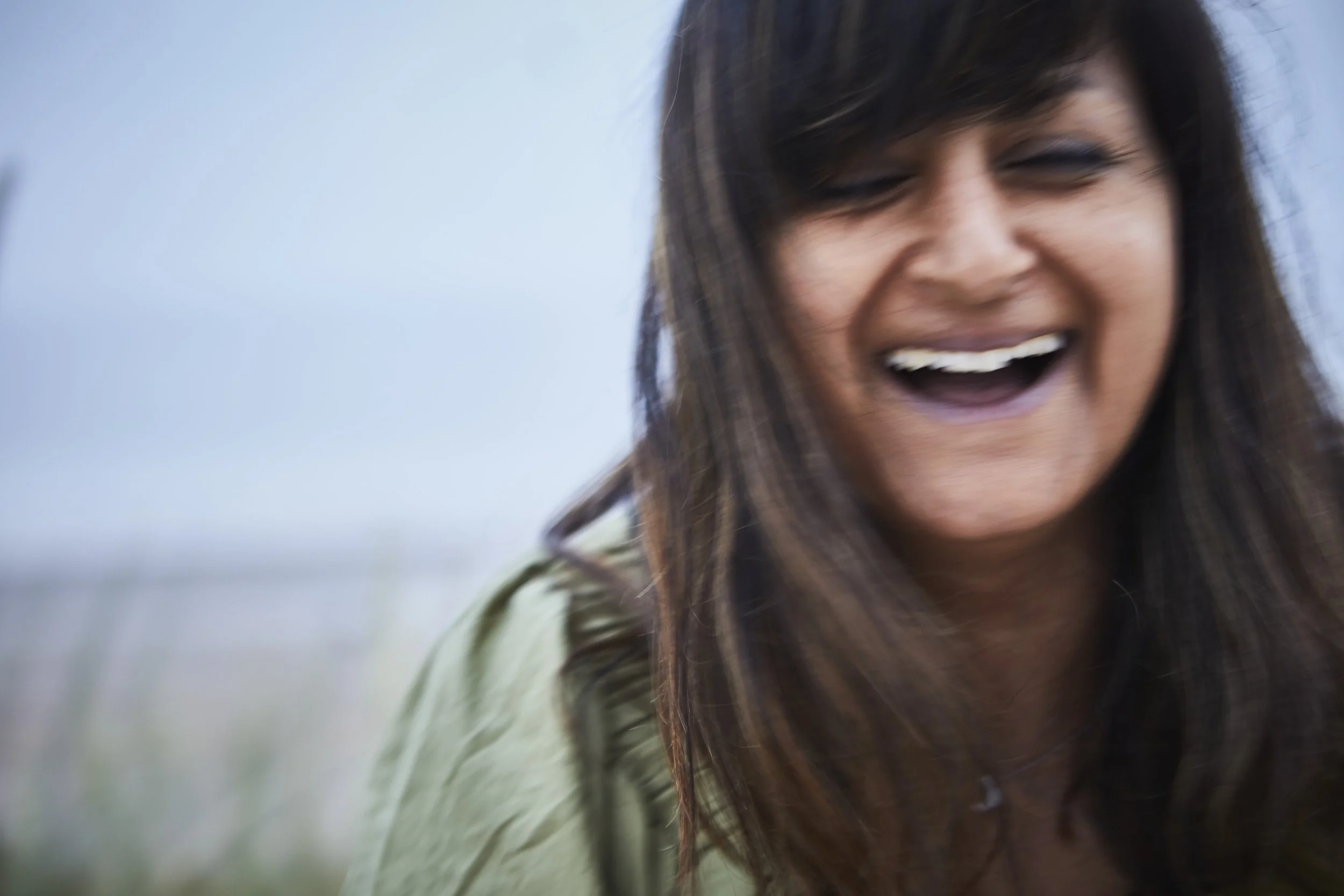
Jhinuk: Well, we’ve collaborated together on our Project Square Hole, which looks into neurodiversity and employment in the creative industries for about five years now, so we have worked very closely for a while, but I think the idea for the portrait came from our friendship rather than our collaboration. After my mum passed away, it was a big moment in my life, and you approached me about doing a portrait as a way of marking that point in time.
Lorna: Yeah, I did. It felt an important act to create an image with you at that time, So, we planned the picture together. Maybe you can talk about the meaning of your name, and how we chose where and how to shoot the concept.
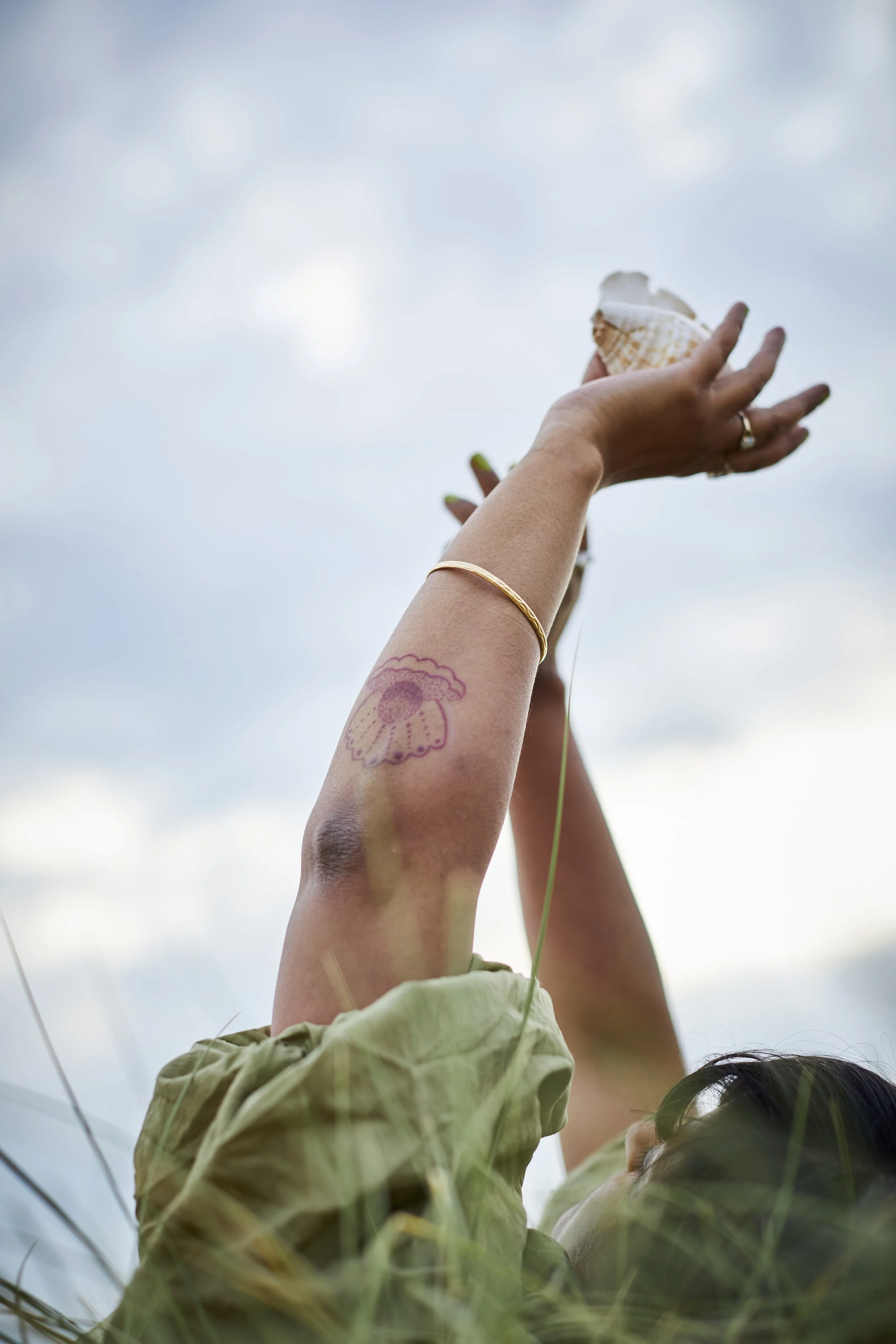
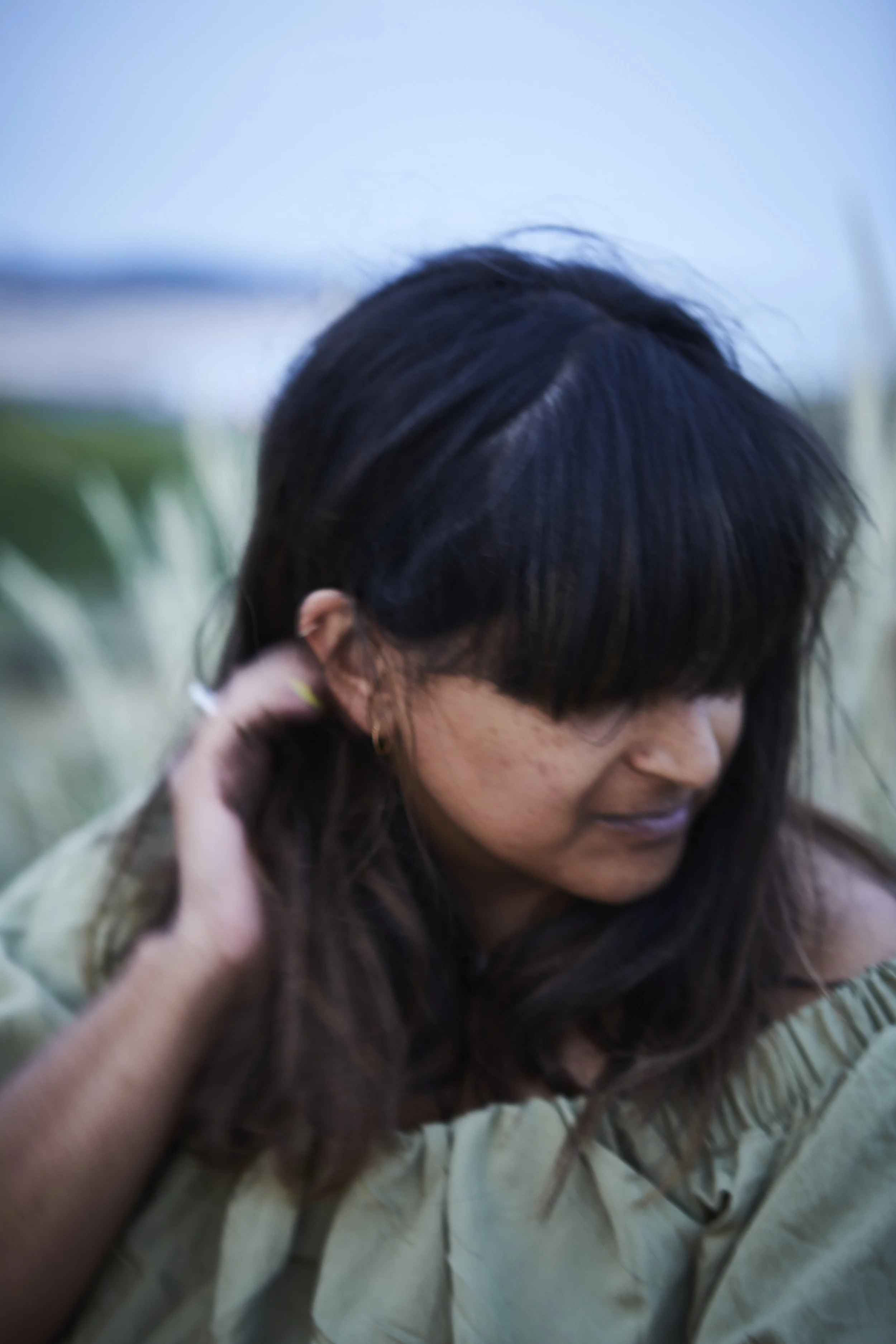
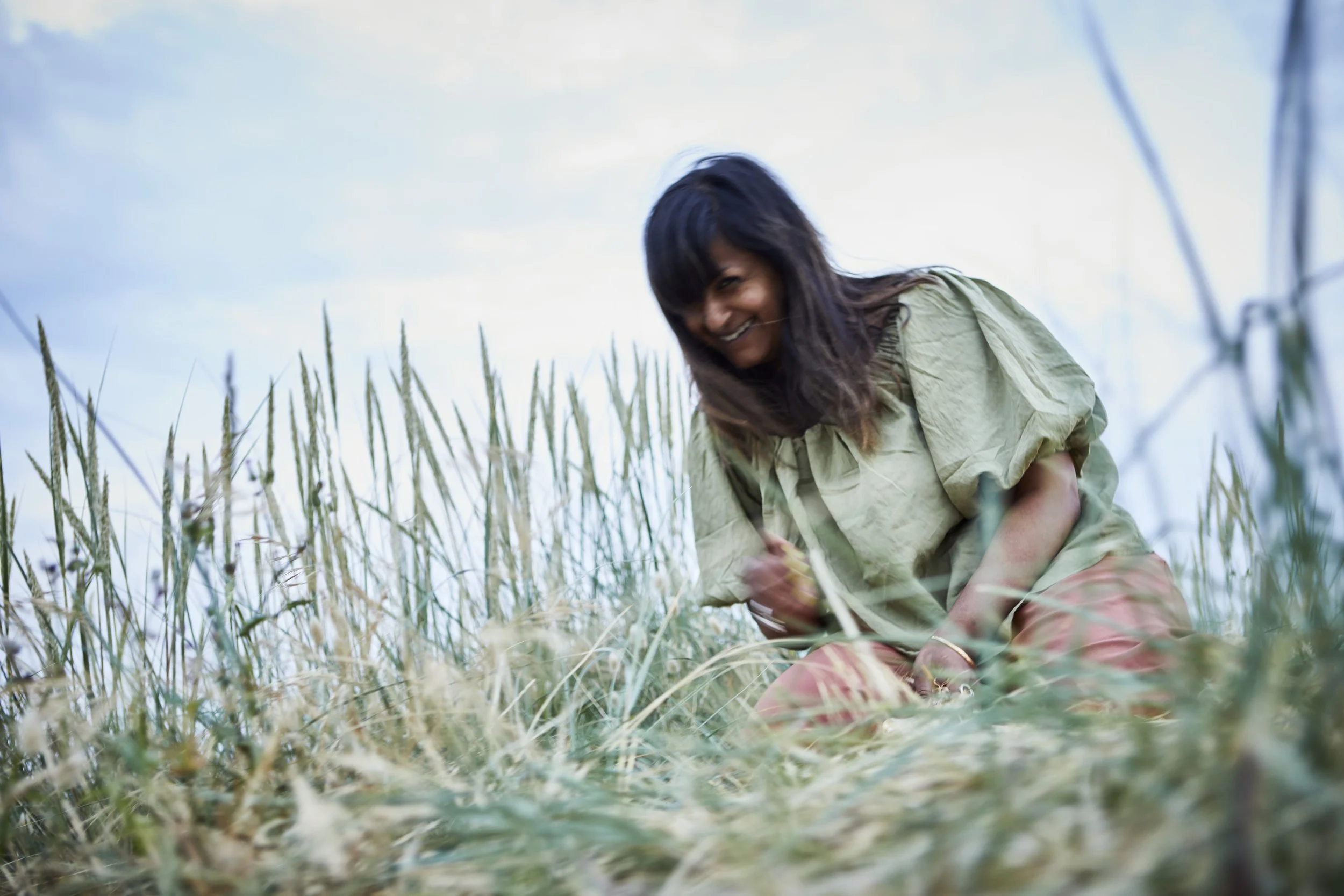
Jhinuk at West Beach
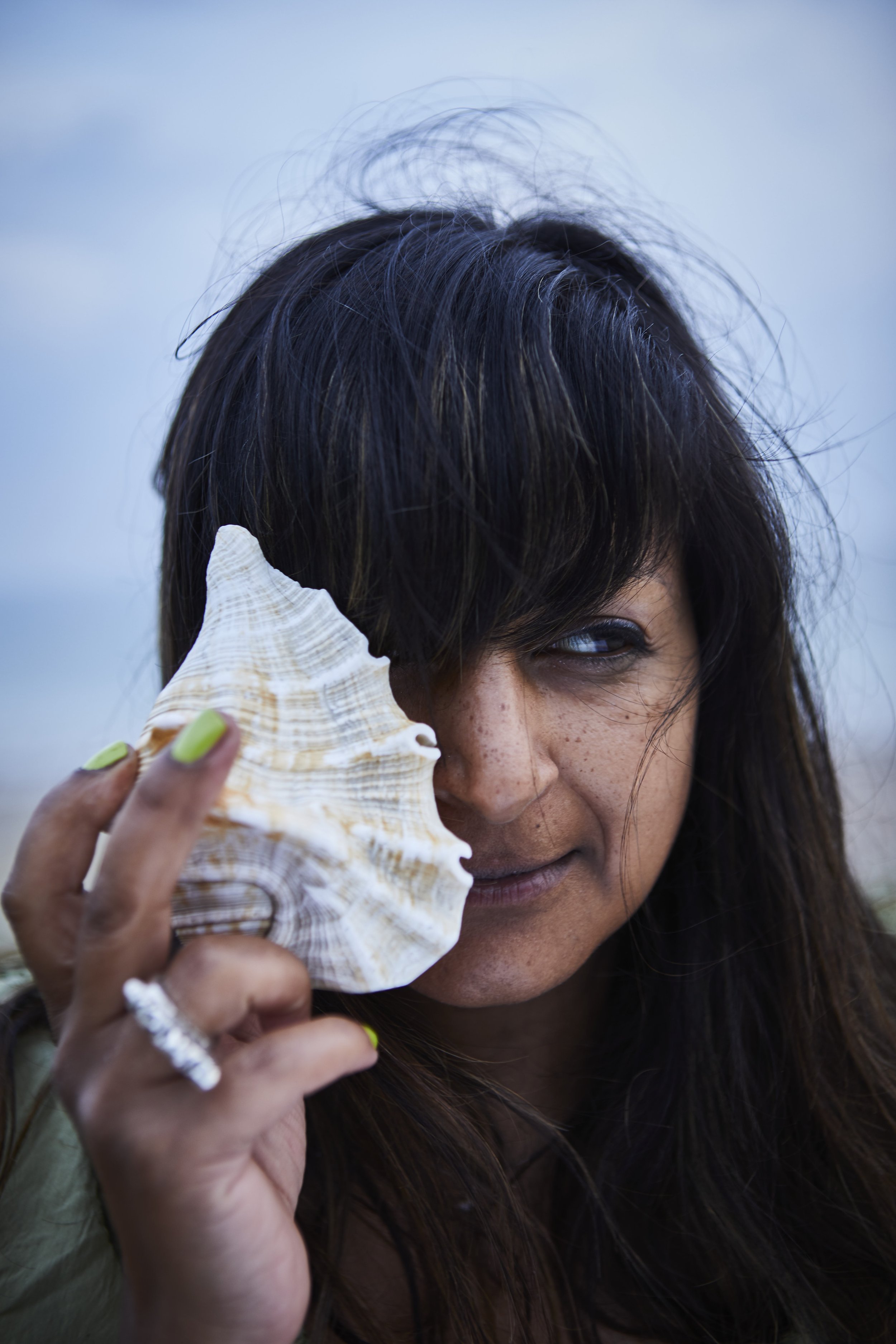
Jhinuk: So my mum and dad named me and my siblings, quite unusual names by Bengali standards. So they are Bengali names, but they're not traditional. They're more like nicknames, but they chose them from poems, and my one means seashell.
I've always loved having that kind of meaning to my name, but then when you translate it and of course growing up in English culture, it kind of gets lost because no one knows what it means. I've always wanted to live by the seaside, and you live on the coast, so it felt quite apt to have it somewhere on a beach, and kind of reminiscent of the, name being given to me by my mum and dad. I also brought with me a conch seashell, which in Bengali culture, you can blow through as a kind of instrument and it is used in certain ceremonies and festivals. So there was that connection as well.
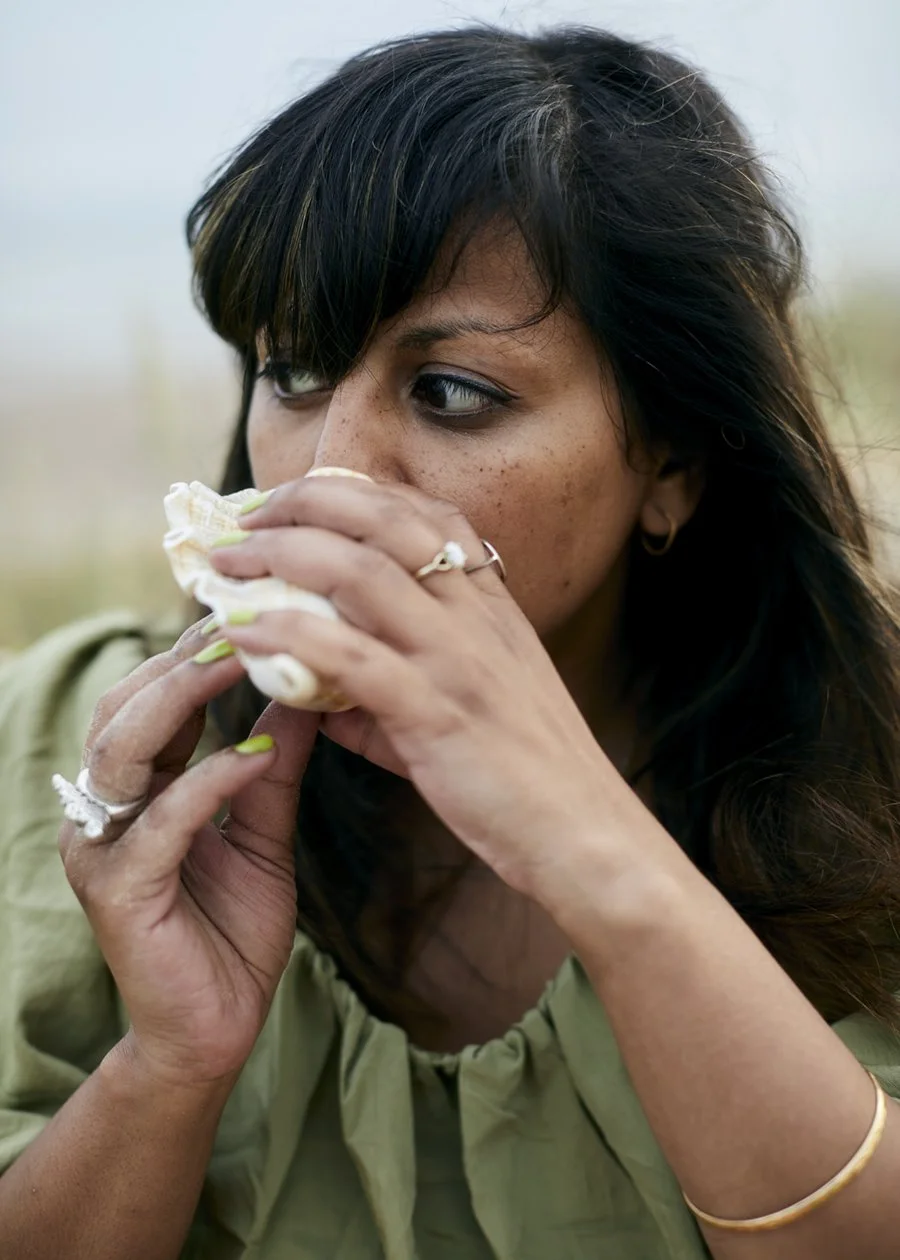
“Art isn't binary, it allows you to hold multiple truths at once and I think that's exciting!” JS.
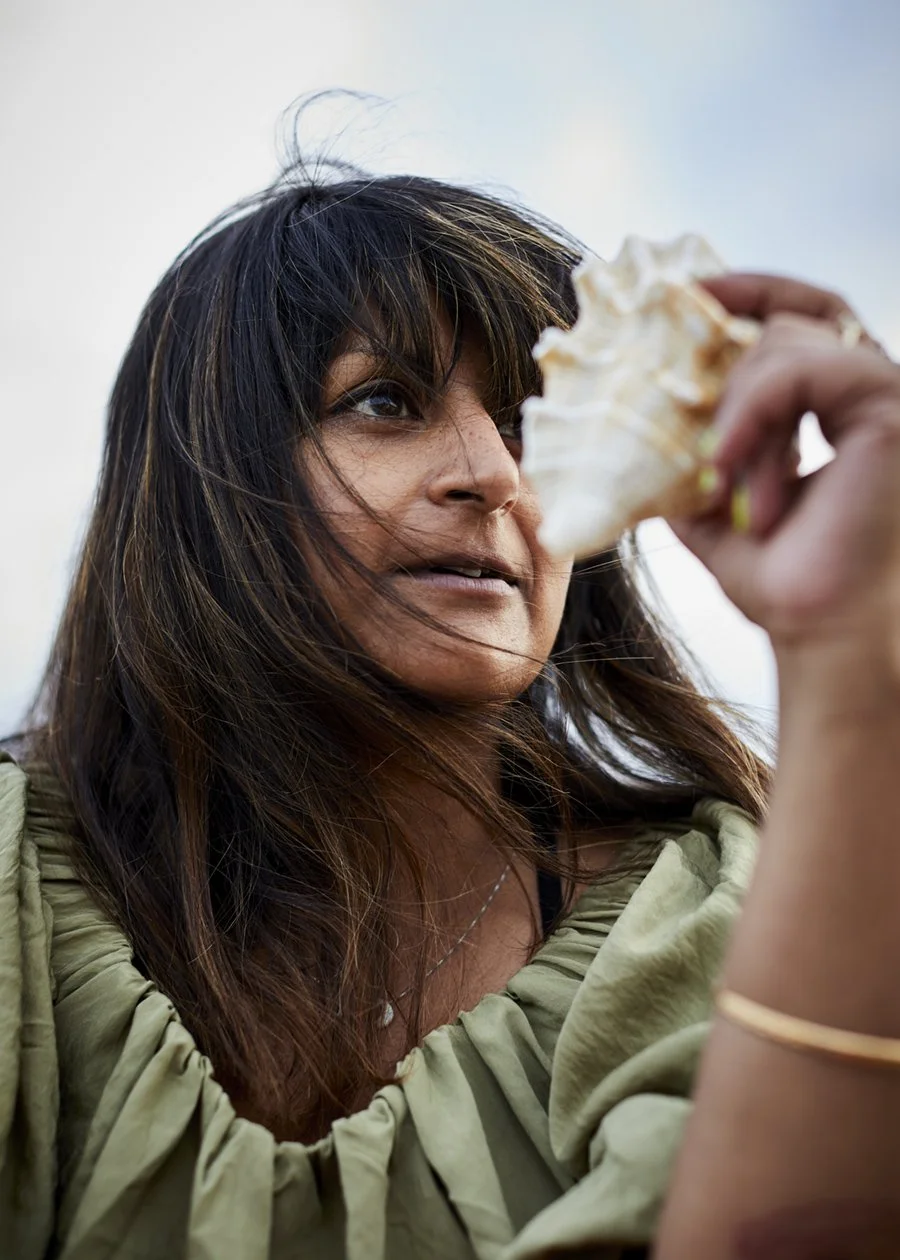
Lorna: The shell was your mum's, wasn't it?
Jhinuk: It was, and she gave it to me just before the last time we went to India together, before lockdown, which was 2018. It was the one time I’d been there for one of our major festivals celebrated in Bengali culture, which my mum's village house is renowned for. They have been doing them since the 14th century in this village. So the story of the shell was I always said I'd never be able to play it and so my uncle taught me how to and because my mum saw me achieve that, she said, “You can have this now.” So she gave it to me. I also wore the gold bangle that was hers for the shoot, that can be seen in some shots.
Lorna: And you did play the shell on that day I remember. How did you feel being photographed, especially for that shoot? Was there a performative aspect for you?
Jhinuk: I was nervous because it was a particular moment of grief I was going through but because we’ve spent so much time together and you understood what I was going through,which made me comfortable working along with the process.
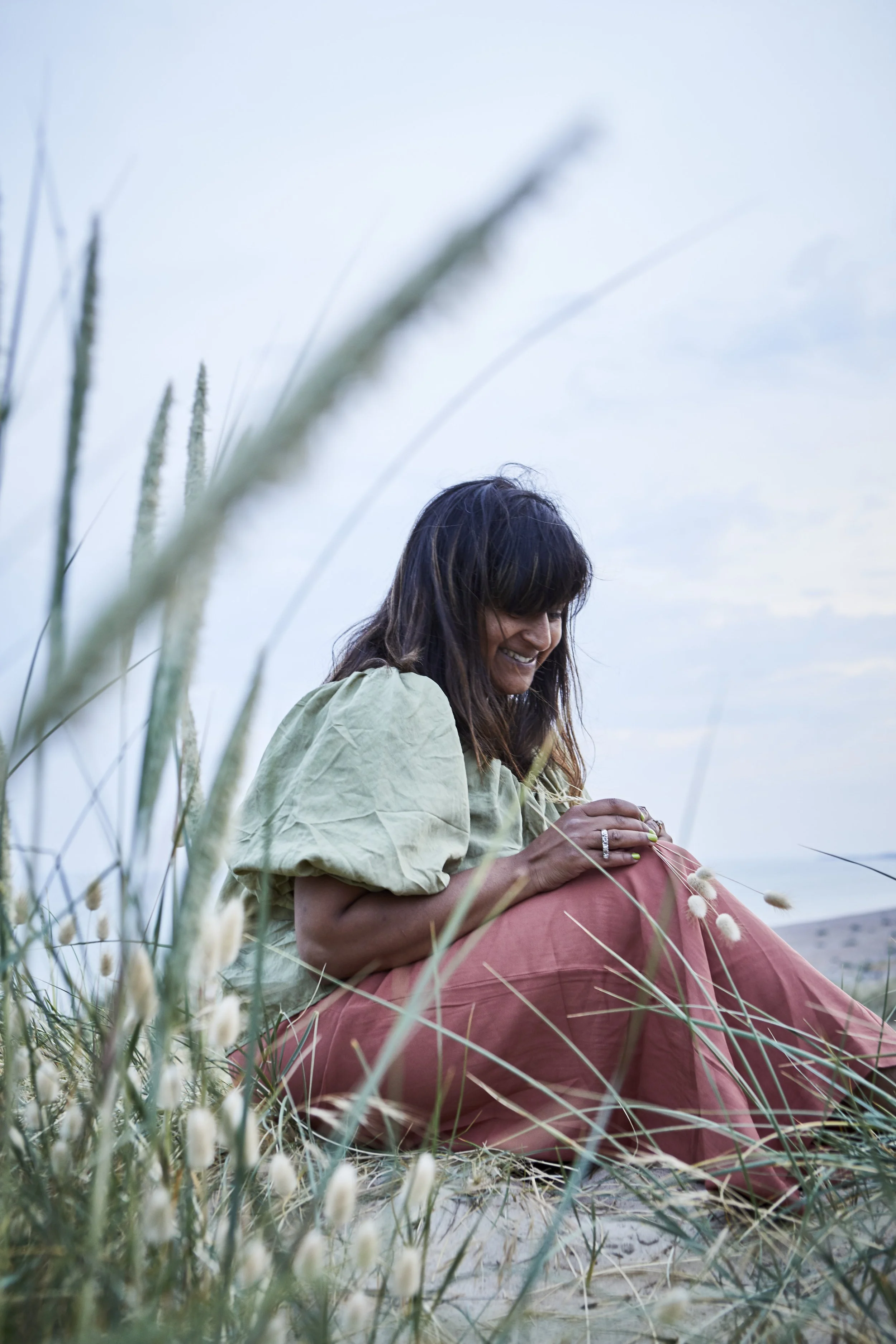
Lorna: And did the image feel like it represented you?
Jhinuk: Yes. Because I knew how you worked, and you knew me, it felt true to that moment.
Lorna: Final question: what do you love about collaboration?
Jhinuk: The best thing about collaboration is how you get something you wouldn’t find alone. It pushes your thinking. I’ve especially felt that with our project. Like when we have been offered great opportunities but perhaps some things haven't quite aligned for one reason or another and that is enough to make us pause and think if it's the right move. That moment when we realised we should both feel good about it and we have each others back, was powerful.
“The best thing about collaboration is how you get something you wouldn’t find alone. It pushes your thinking” JS.
Lorna: Yeah, it was a good lesson in advocating for ourselves, and each other.
Jhinuk: And it strengthened my independent practice too. It’s changed how I make decisions. So yeah, hats off to us! Collaboration can be transformative.
Lorna: Totally agree!