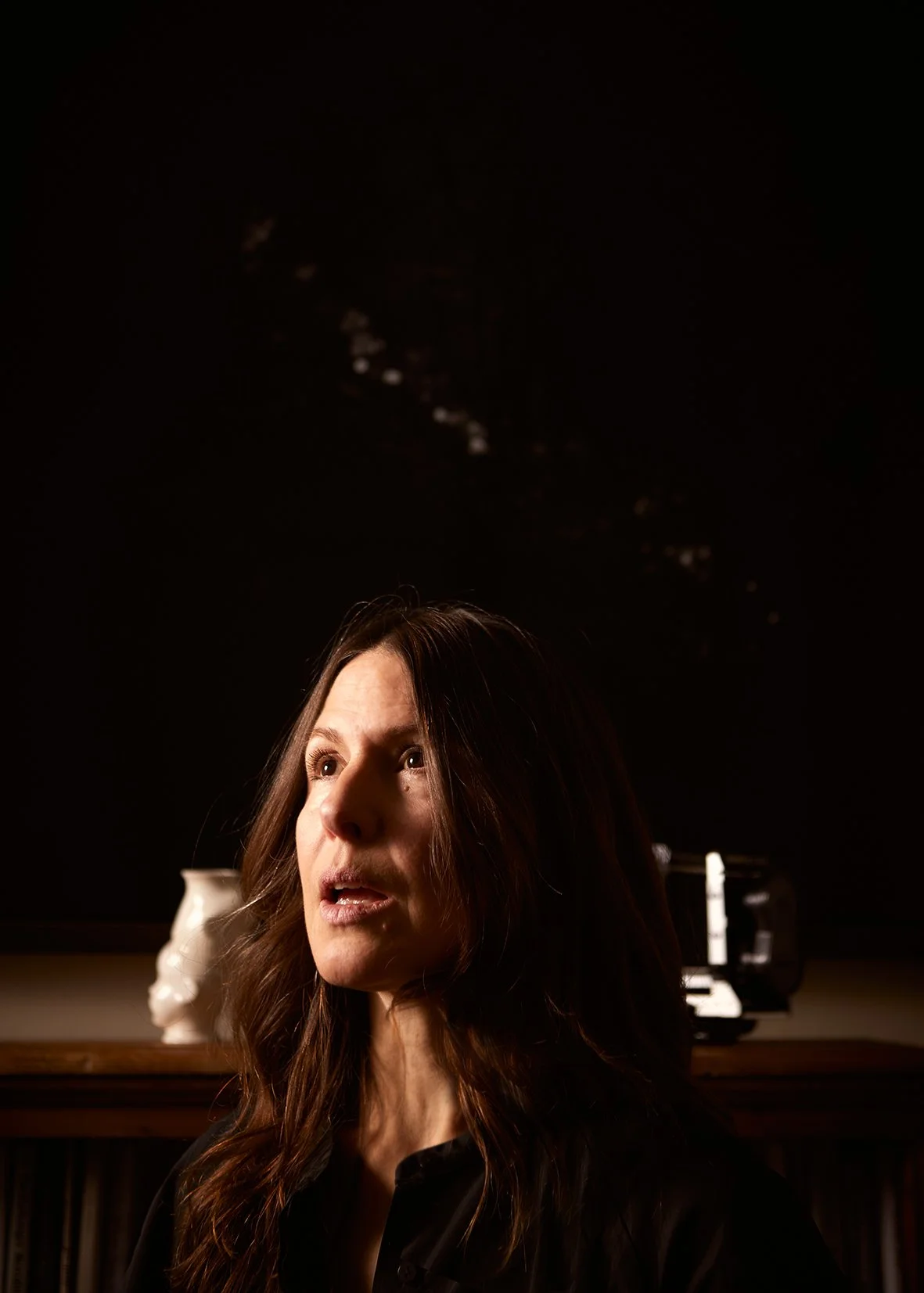
Lorna Allan’s ‘In Frame’ series presents
A performance of light and shadow
Interview with Eloise Calandre
Lorna: What’s your earliest memory of a photograph? Was it taking one, holding one, or being in one?
Eloise: When I think back, what comes to mind is holding photographs from when I was younger. I have a lot of old family photos that have always fascinated me. I love their particular aesthetic, the tones, colours, and formats, the times that they were taken. One of the things I love most about photography is that it's a moment in time, captured. You can look back through time by holding this object in your hand. I especially love seeing myself as a baby; it feels so unreal. And seeing my mum when she was younger than I am now is pretty amazing.
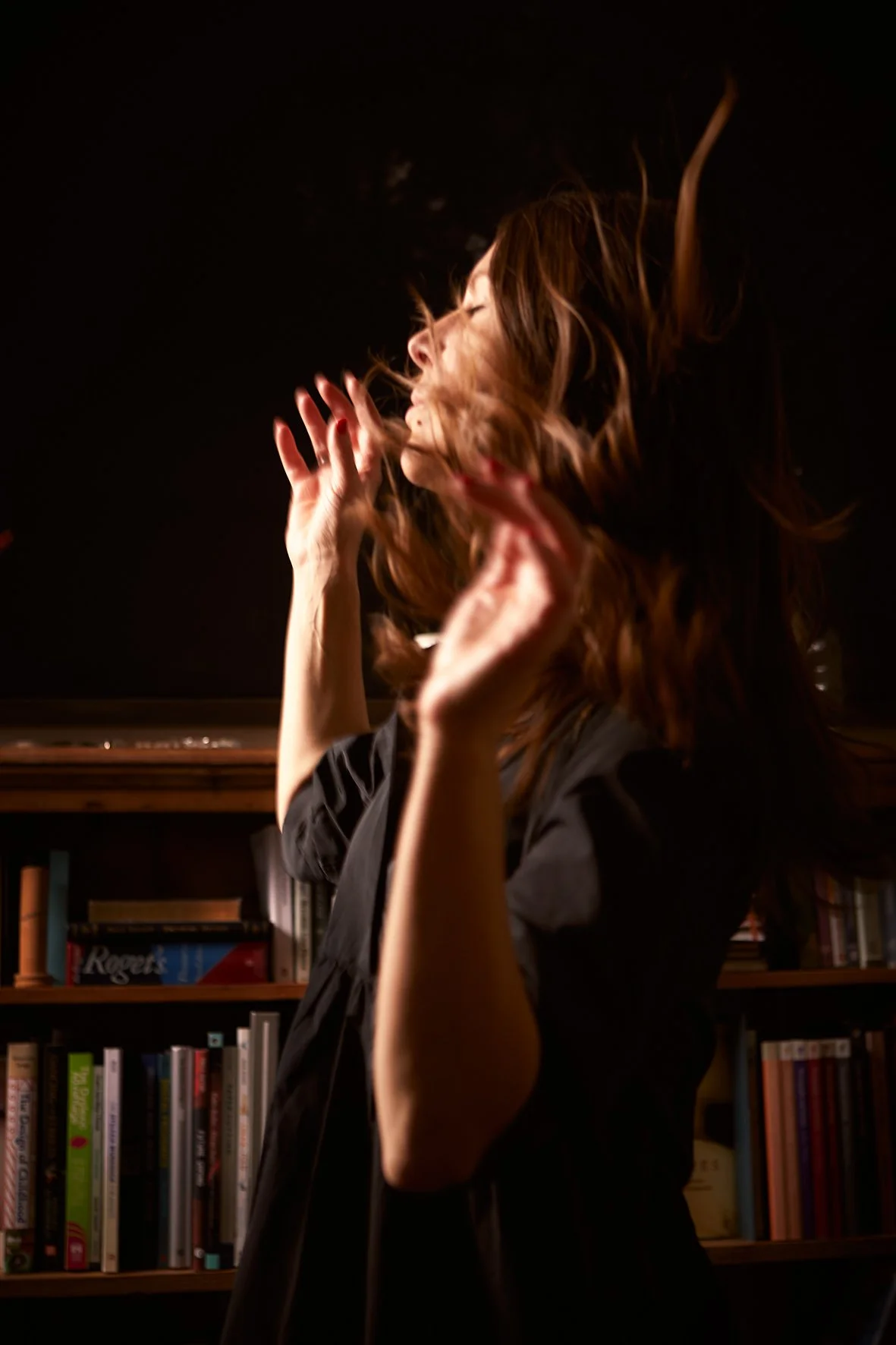
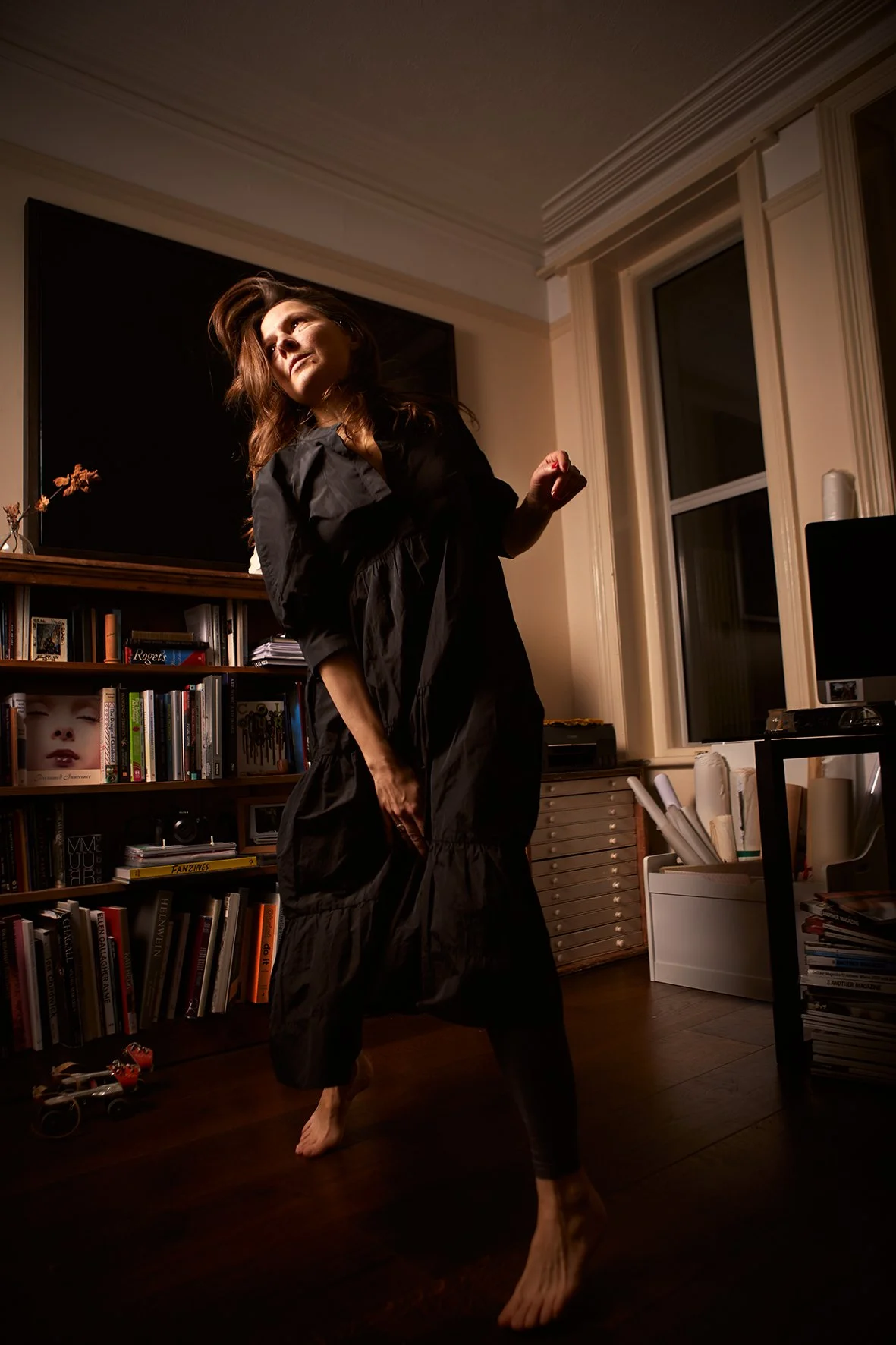
Eloise in her studio
Lorna: Do you have an image that’s important to you? Like a screen saver, something in your wallet, or by your bed?
Eloise: My screensaver is actually quite important to me. I’ve curated a folder of carefully selected film stills, which come up randomly throughout the day. They’re not obvious shots either, I go out of my way to find particular stills that capture a vibe or a specific moment. I also love behind-the-scenes stills. They give that same feeling of looking back in time and show the interactions and creativity happening during the making of a film. These images make me feel good, they connect me to the creative space I want to inhabit when I sit down to work.
Lorna: Can you tell me a bit about your art practice, what is it you do?
Eloise: My practice is rooted in photography. For many years I worked exclusively with still photography and moving image. But before that, as a kid, I was always drawing and painting, so that sensibility still feeds into how I see and make work. I’m interested in moments in time, layering time, and using photography as a kind of threshold between different types of space, lived experience, captured moments, and memory.
Light and shadow are also really central to my work. I remember walking as a child and being mesmerised by the way light fell in the environment; it felt atmospheric, like it held a presence. That sense of illumination, contrast, and atmosphere definitely feeds into my visual language. Light and shadow are like characters in my work; they interact and partner together.
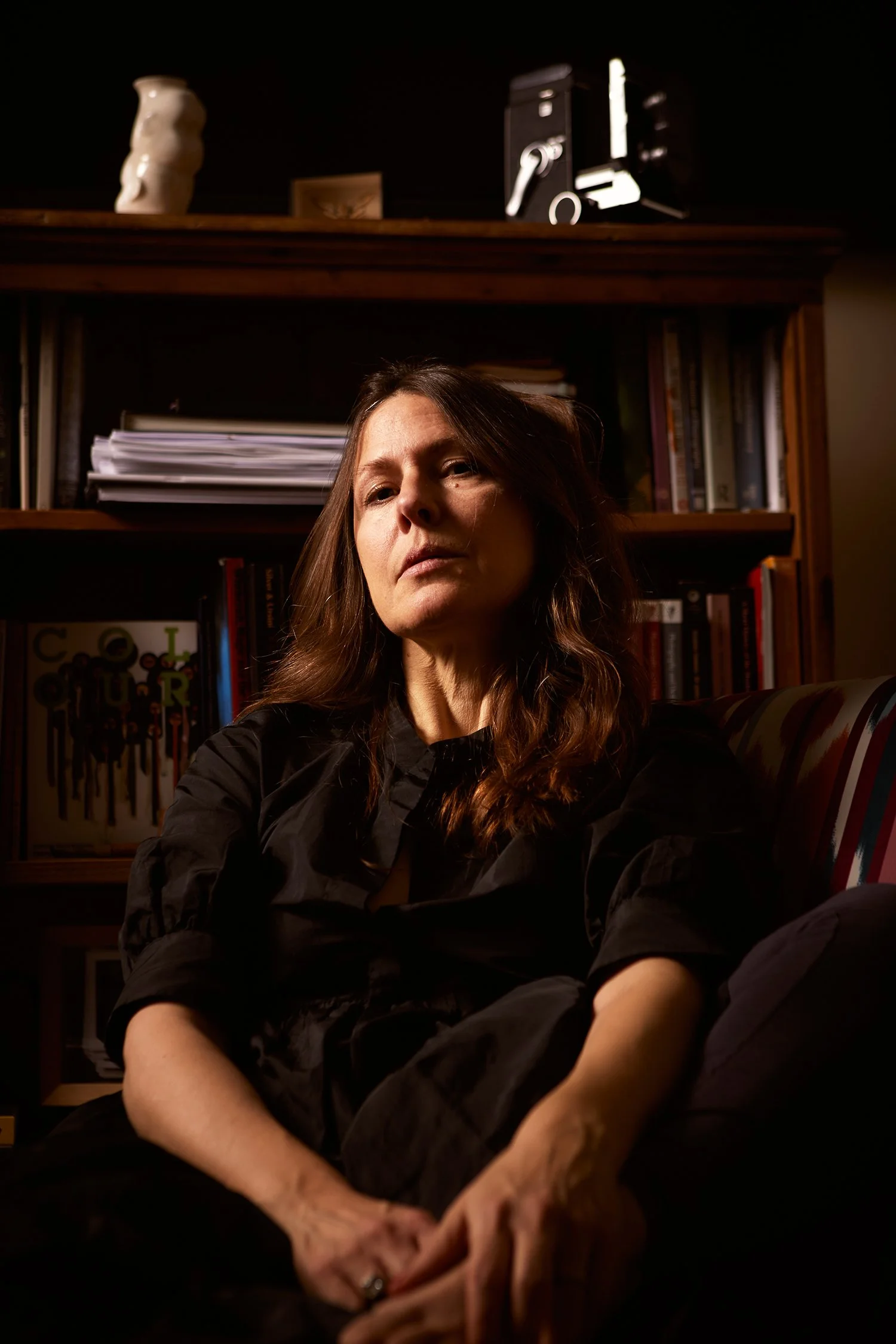
“Light and shadow are like characters in my work. They interact and partner together.” E.C
Lorna: That performativity you describe ties into how we came together for our collaboration. Can you share how we first started working together?
Eloise: We collaborated for the Brighton Photo Fringe and exhibited at Colonnade House. Our idea was to use local archives and our own photography, then invite the community to contribute their own images and memories to add to a kind of evolving sculpture. The installation grew and unfolded throughout the duration of the exhibition into a type of living archive.
We were both really interested in how our practices could merge, especially around performative photography. And the idea of layering time of older photographs of Worthing, contemporary ones, and everything in between, created this beautiful collision of past, present, and potential futures.
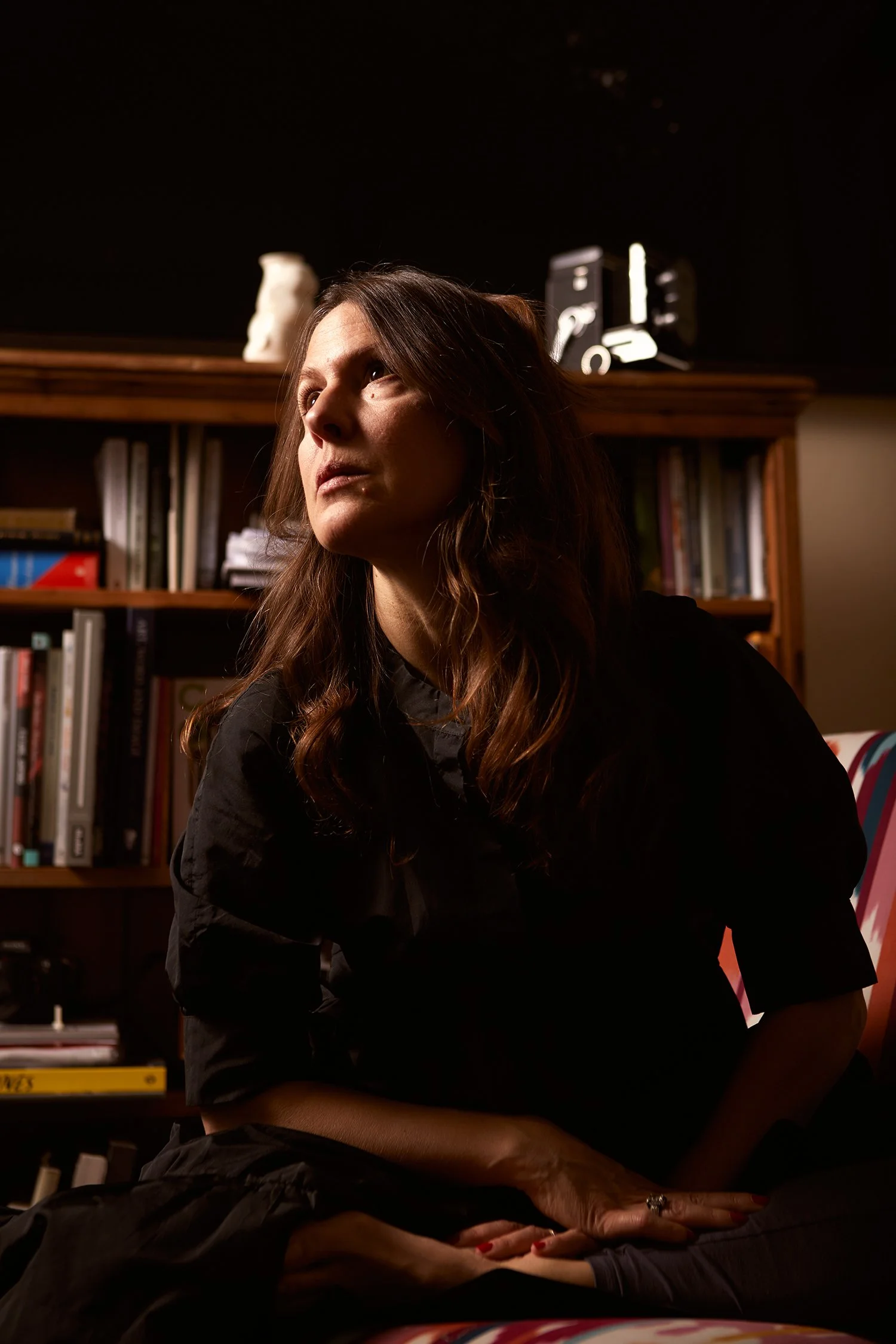
“Photography is like holding a moment in time. You can look back through time just by holding an object.” E.C.
Lorna: Yes! And the evolving nature of the piece was special, it wasn’t finished when it opened. People brought in their memories and stories, which sparked more conversations and contributions. That collective building was so interesting to explore.
Eloise: Totally. I think it was the first time I’d made a show that wasn’t finished at the start. It was evolving, unpredictable, and invited people to become part of it. Some brought images, others were just triggered into remembering memories. That storytelling aspect really resonated with me.
Lorna: After that, I really wanted to take your portrait, as my collaborator, but also as an artist. Can you talk about that process from your perspective?
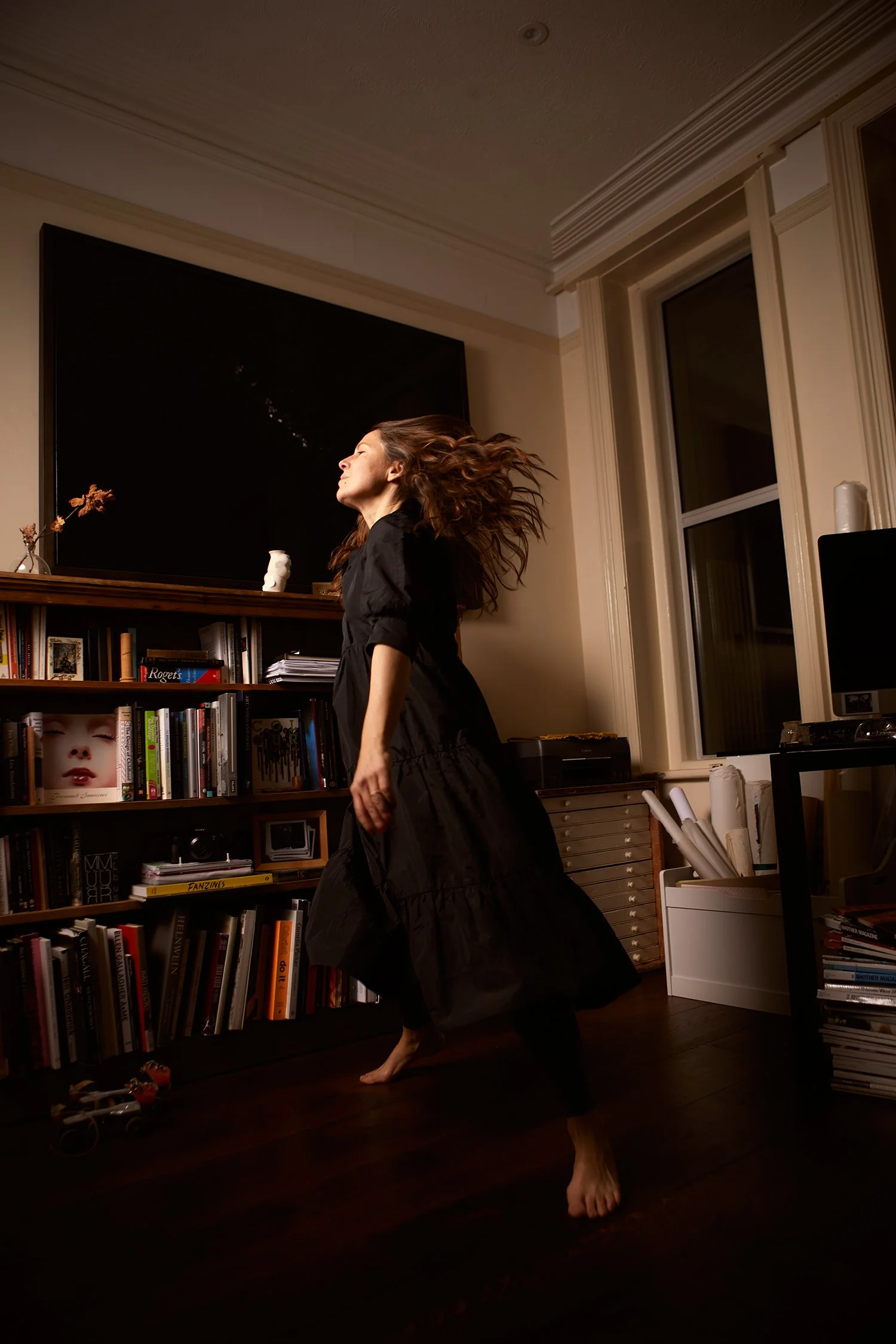
Eloise: You came to my studio, and we sort of settled into the space together. I remember we talked about my work, the themes in it, light and shadow, especially, and you incorporated that into the portraits. It felt like the studio became part of the image, not just the setting. We experimented with different lighting and poses, and then I started talking about dancing.
I’m not sure how that came up, but I started dancing, probably as a way of feeling more free. You kept photographing, and it felt really natural. I remember feeling really good in that moment, at peace, in harmony. It was joyful.
Lorna: It really showed! I’d never seen you look so comfortable and full of joy. It was a beautiful thing to witness and capture on camera.
Eloise: That means a lot. I’m actually quite a shy person, but dancing has always felt natural to me. It’s a way to let go, to be absorbed in something. There’s a freedom in it. And even though being photographed can feel vulnerable, I felt safe with you. You made me feel relaxed.
Lorna: Do you think photography is inherently performative?
Eloise: Definitely. As a photographer, there’s a performance in both taking and being in photos. The camera itself alters the dynamic, sometimes it separates, but it also connects people. Putting a camera between you and the world changes how you perceive and frame reality. That’s a performance.
Being on the other side of the lens made me want to submit to the process, not resist it. I think because I understand what makes a good image from behind the camera, I wanted to give that back when I was in front of it. It became a kind of mutual trust.
Lorna: Yes, that trust felt really present. Even though I was taking pictures of you, it felt very collaborative.
Eloise: Exactly. It felt like the image represented me and my work, but also represented you and our relationship. That mix made it quite meaningful.
“Art gives me another language. It gives me space to process, reflect, and express who I am.” E.C.
Lorna: Ok last couple of questions, what do you love most about collaboration?
Eloise: I love the shared experience, the merging of two minds. Collaboration isn’t just about making something together; it’s about support, trust, and creating space for each other. It can be freeing to step outside your own head and bounce off someone else. While I often enjoy working alone, collaborations bring a different kind of energy, a creative camaraderie. You become a unit, and that’s powerful.
Lorna: What do you love best about being creative, and what motivates you to create?
Eloise: I don’t think I could put my finger on exactly what motivates me, it feels like something that’s always been within me. Ever since I was old enough to pick up a pencil, I’ve just been making things with my hands. I’ve always had this instinct to create.
I think it’s also about looking, I love observing the world around me and translating what I see into something that comes from me. It’s a way of responding to the world that feels personal and natural.
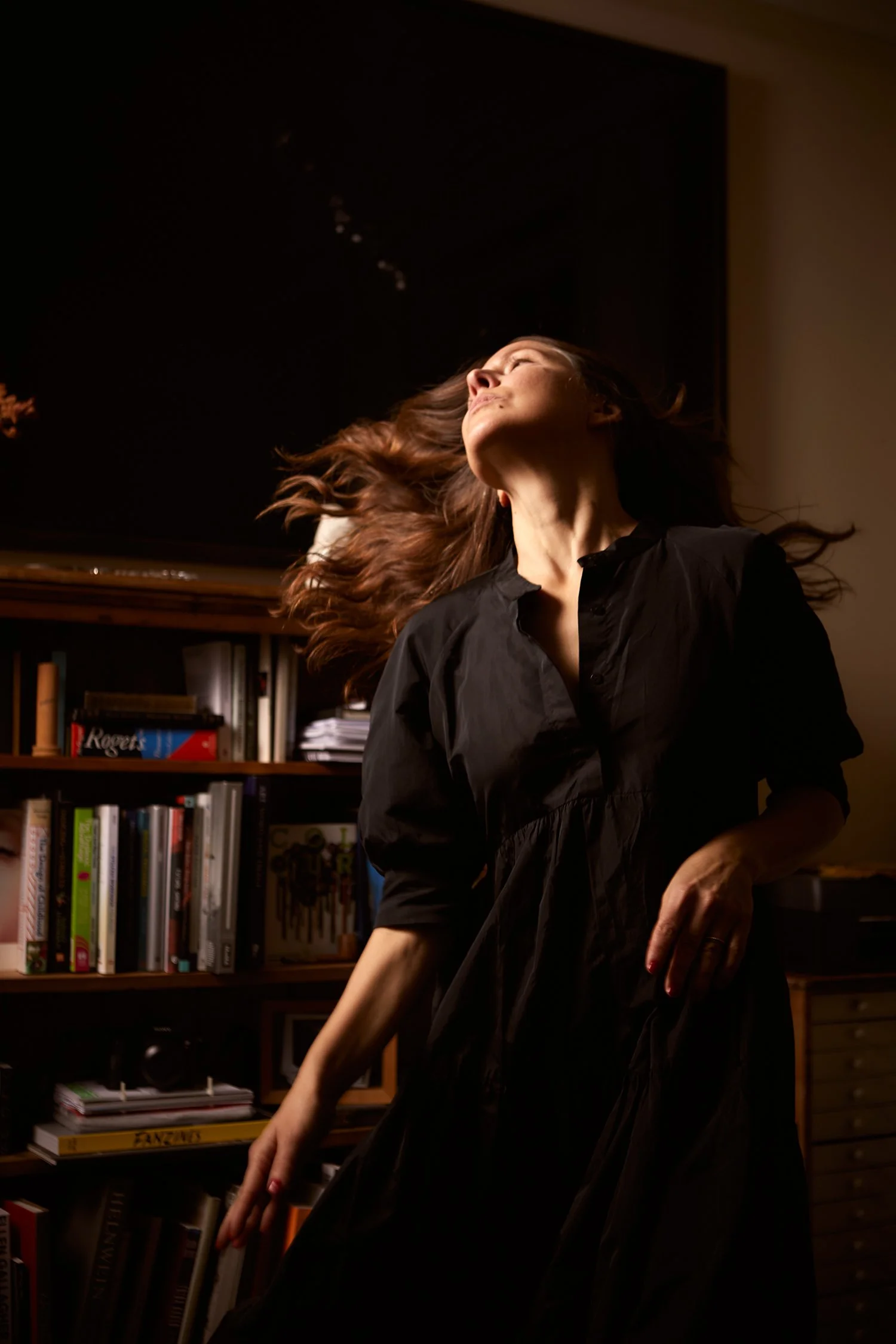
Eloise dancing
“You become a human creative unit, collaboration isn’t just about making something together, it’s about support, trust, and creating space for each other.” E.C.
Lorna: That’s really interesting, so what is it that keeps you coming back to it?
Eloise: For me, creativity is a way to express myself, in a way that I often can’t do with words alone. It gives me a way to communicate something deeper, more instinctual.
Lorna: Would you want to mention anything about your neurodiversity in relation to your creativity?
Eloise: Yeah, I think it’s relevant. I’m quite a shy person, and I don’t always feel like I have the right words in the moment. But creativity, whether that’s making art or writing, gives me another language. It gives me space to process, reflect, and express who I am and what I care about. Even though I say I might not have the right words, writing is actually a big part of my creative practice, but I do it in my own time and space, where I feel safe.
Lorna: That’s beautifully put and I can really relate to that
Eloise: Thanks, I really believe that making things like art, words, whatever, is such a hopeful act. It’s about offering something of yourself to the world.