
Lorna Allan’s ‘In Frame’ series presents:
On the Edge of Light: Framing a Neurodiverse Practice
Interview with Natasha Golding
Lorna: Hi Natasha, can you tell me what your earliest memory of a photograph is? Was it taking one, holding it, or being in it?
Natasha: Am I allowed to talk about a video? I’ve got this home movie that’s blurred with memory. But, what I do remember clearly is the cameras themselves. Over my childhood, they changed, and I remember every detail—the buttons, the sound, the feel. My mum had this compact 80s chrome camera, and I was fascinated by loading film into it. I loved the substance of film—the texture, the grain. A friend once gave me film from a projector, and I kept it for ages. And those little black film canisters, gorgeous.
Lorna: Yes! I had a 110 camera as a kid. Tiny viewfinder, little film cartridge—you clicked it and that was it. It’s that click sound that stays with you.
Natasha: Exactly. I had an analogue camera as a teen—you opened the back, slipped the film in, wound it, set your aperture and focus, then—click. That click was everything. I loved it. That’s my memory.
Lorna: So much of photography is about framing, too. I remember doing collages because I wasn’t confident drawing.
Natasha: Yes! Framing was huge for me too. I made collages as a teenager, using magazine cuttings. I didn’t draw much either, so I’d use photos. I recently showed my son all the composition choices he’d made in a collage from art class—without even thinking about it. .
“It's about going, ‘you know, what - through my lens, how does the world look?’. And then it's something about having a process attitude. It's the determination to make something happen, that's the thing we're cultivating.” NG
Lorna: Do you have a picture that’s special to you, like a screensaver?
Natasha: On my phone, I have a photo of Patti Smith looking brilliant. On my computer, it’s a picture of me climbing this graffiti-covered concrete structure that says “Burn it down”, it was outside an old dental hospital turned artist space in Amsterdam where I took a short-term let during COVID. I was in a really high phase—like, euphoric—but also going through a lot.
The photo encourages me to remember some sort of activist role in the world. But I have days where I look at it and I'm scared. I'm not sure if what I was doing was really good for me and is it all too shouty?
Lorna: Can you tell me a bit about your art practice, or how you think about what you do?
Natasha: I think you sound like a prat if you say, my life is my art but then it’s true. I don't have creative disciplines that I've trained in, I don't have an art school background. I’ve always made things, been around artists and activists. It’s about acting against the world in a manner that is expressive of your own ideas. It's to do with autonomy, hether it's drawing, performing, protesting, or writing a complaint to the DWP (as I was doing earlier)—it’s all creative action.
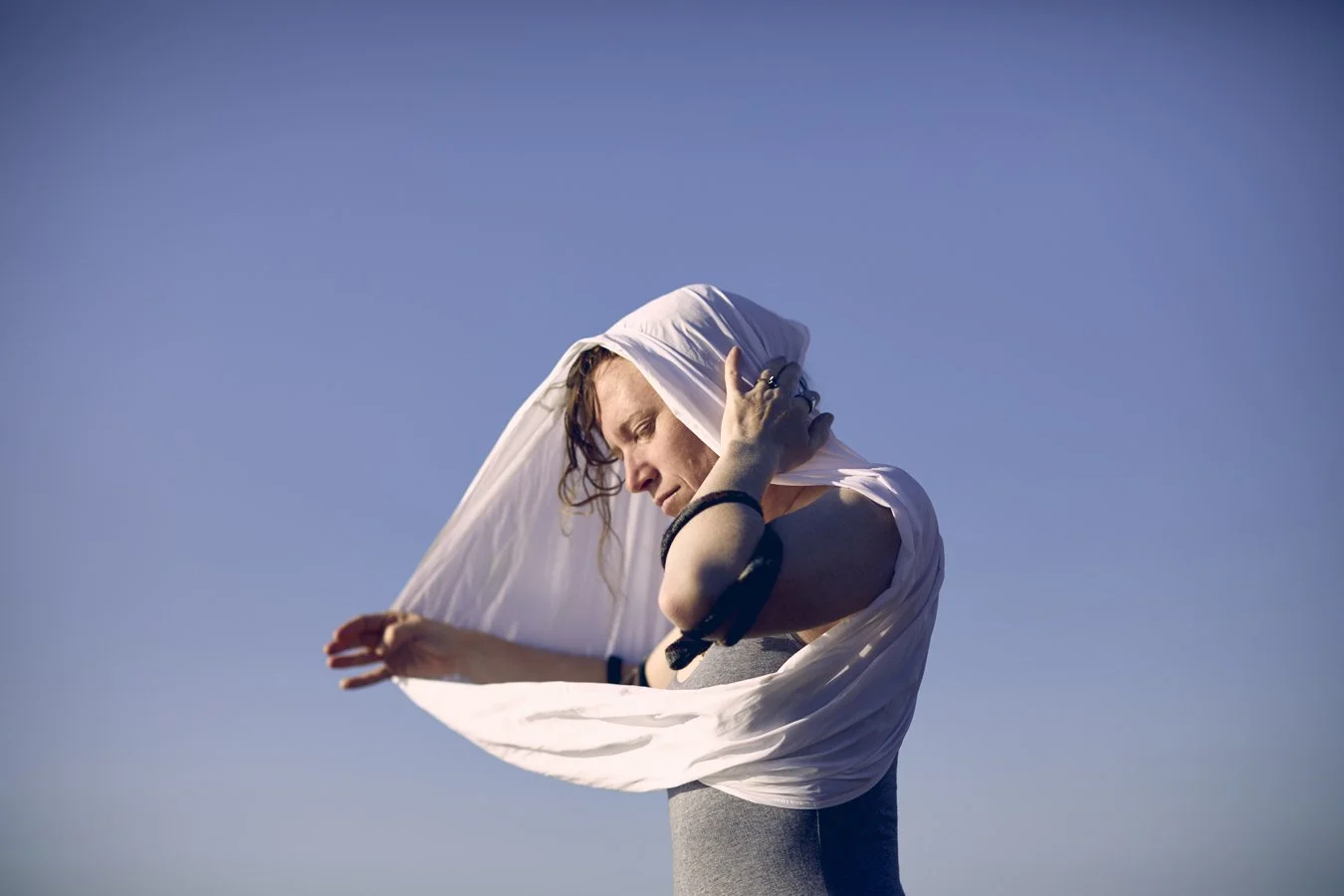
“They've helped me understand the significance of honestly capturing different states. You're not trying to say ‘this is the essence of me’. It's an event that communicates something about that person at that time” NG
Lorna: That really resonates. Sometimes it’s hard to explain that kind of practice; it doesn’t fit into a neat box.
Natasha: Exactly.
It's about going, ‘you know, what - through my lens, how does the world look?’. And then it's something about having a process attitude. It's the determination to make something happen, that's the thing we're cultivating.
Lorna: So how did we come together for our shoot?
Natasha: We met at Colonnade House, in a doorway. I was talking about being neurodivergent and someone said, “You should meet Lorna.” I made a remark about not believing in “creative people” because semantic problems is what I'm all about! In our culture, words begin to lose their meaning because they get co-opted. I am always looking for new words to describe things so that they have more power. I quickly saw that you were someone who thought deeply about things, someone I could talk with. You were working on a portrait project, and we decided to collaborate.
“And photos are always reflecting something back to you that you need to understand about now. That's why portraits are so important.” NG
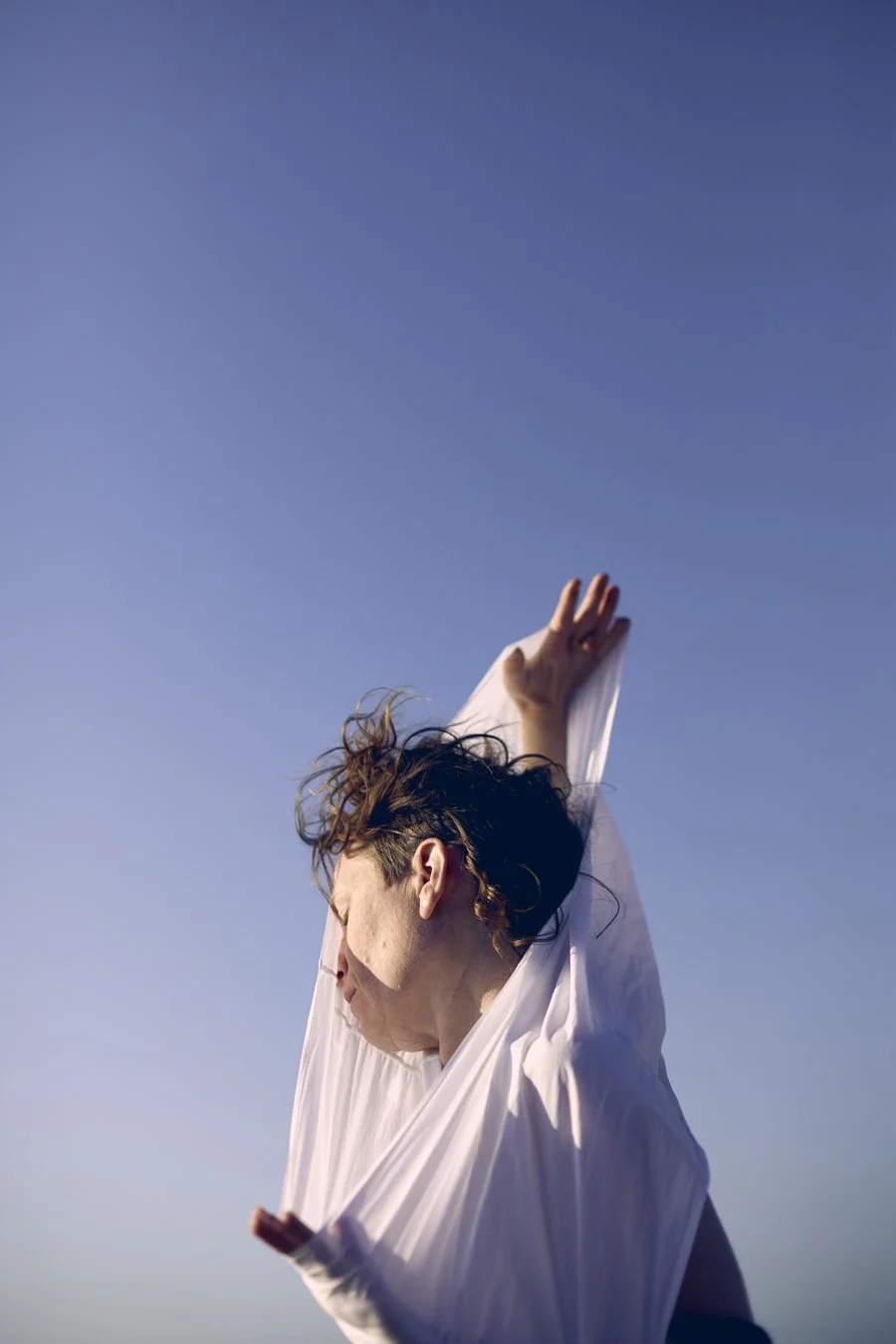
Lorna: I remember that. And we talked about movement and your sensory experience, which influenced how we approached the shoot.
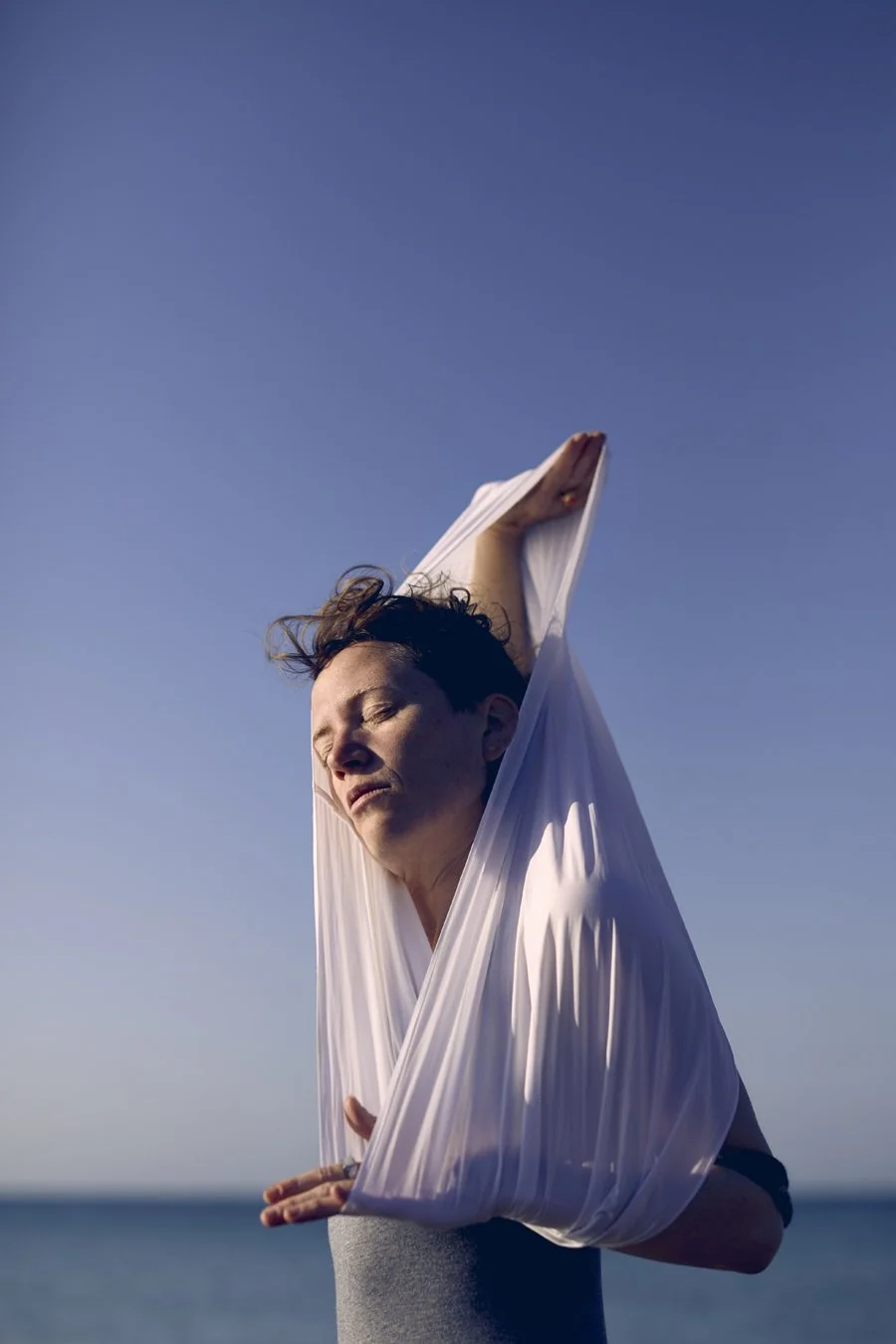
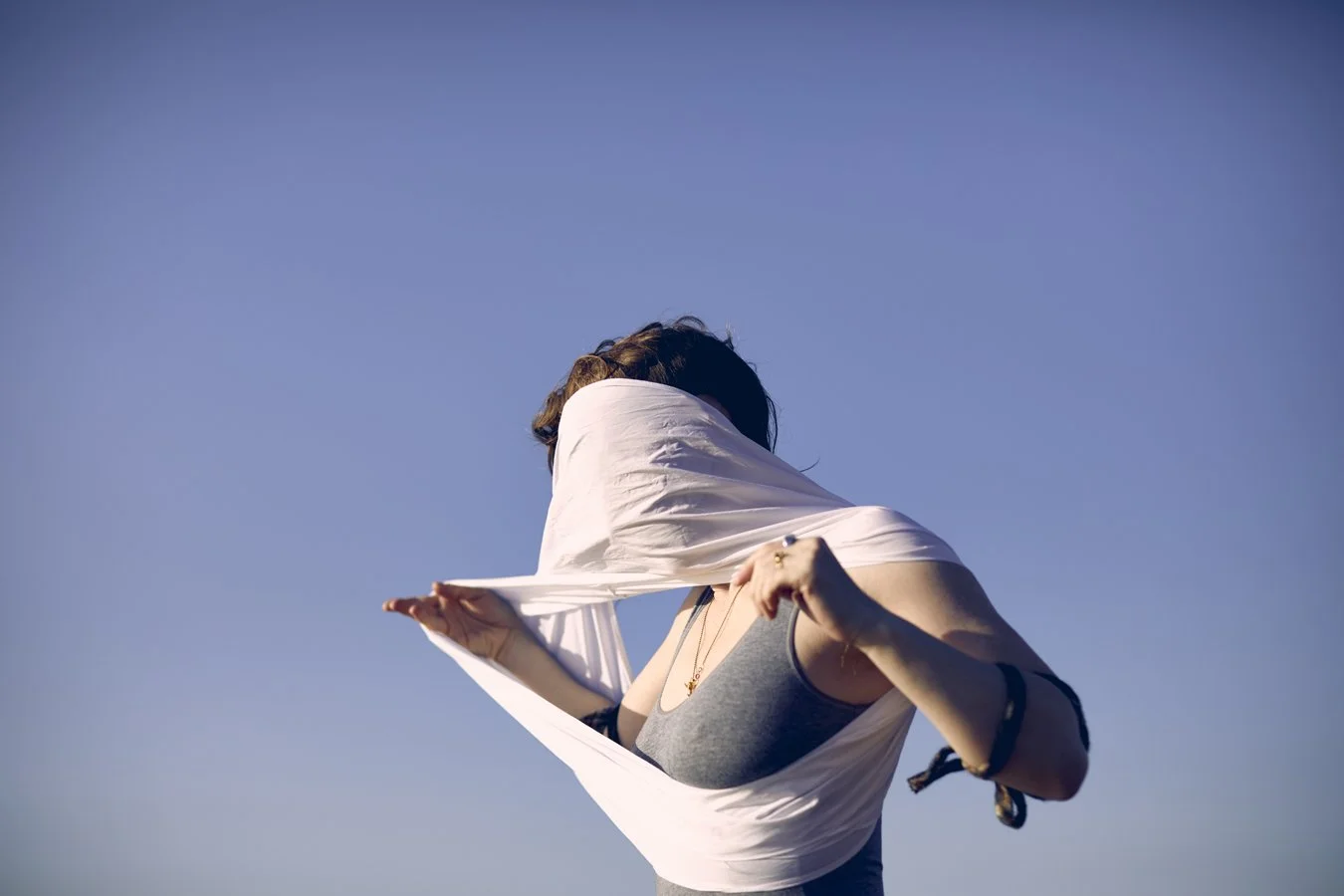
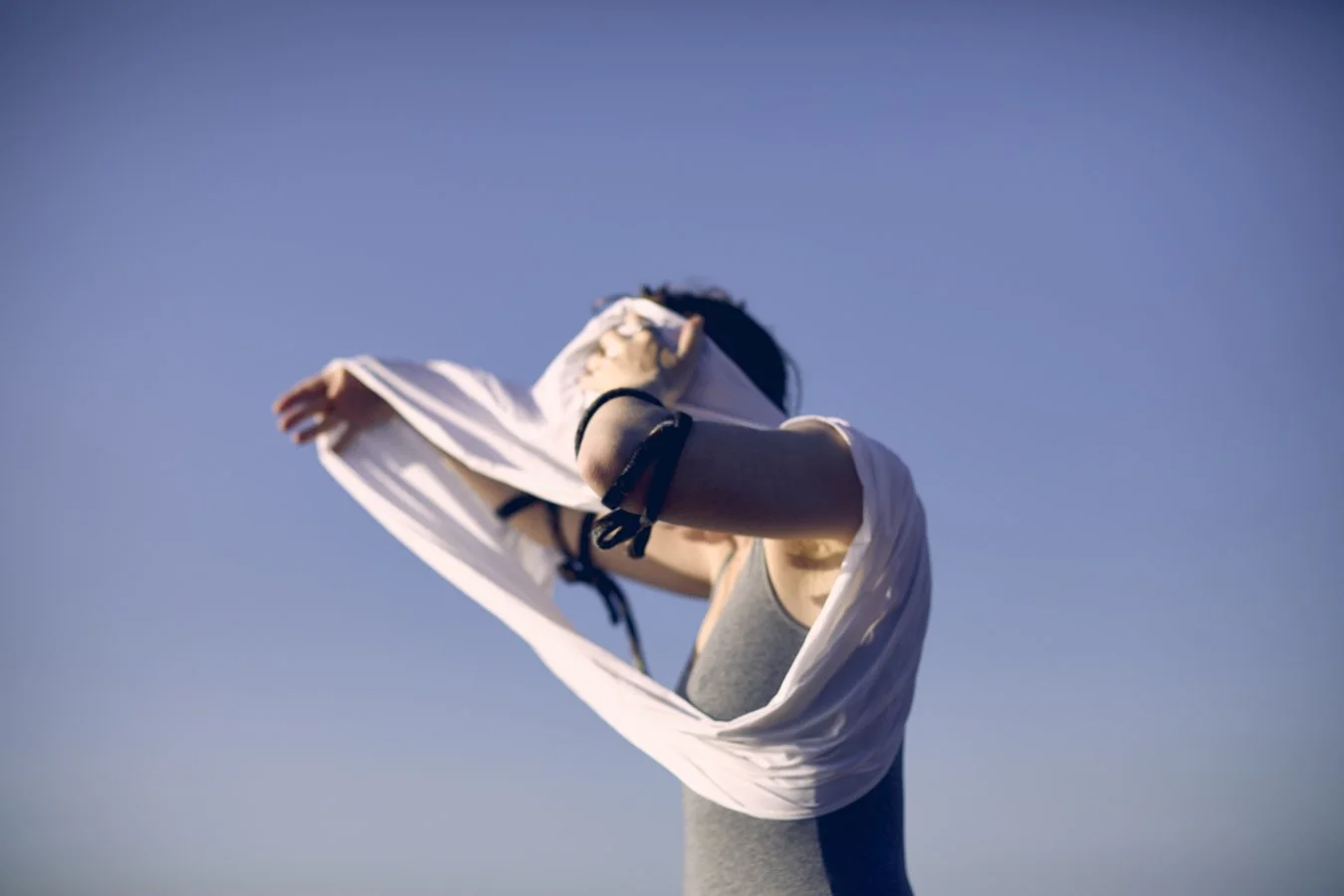
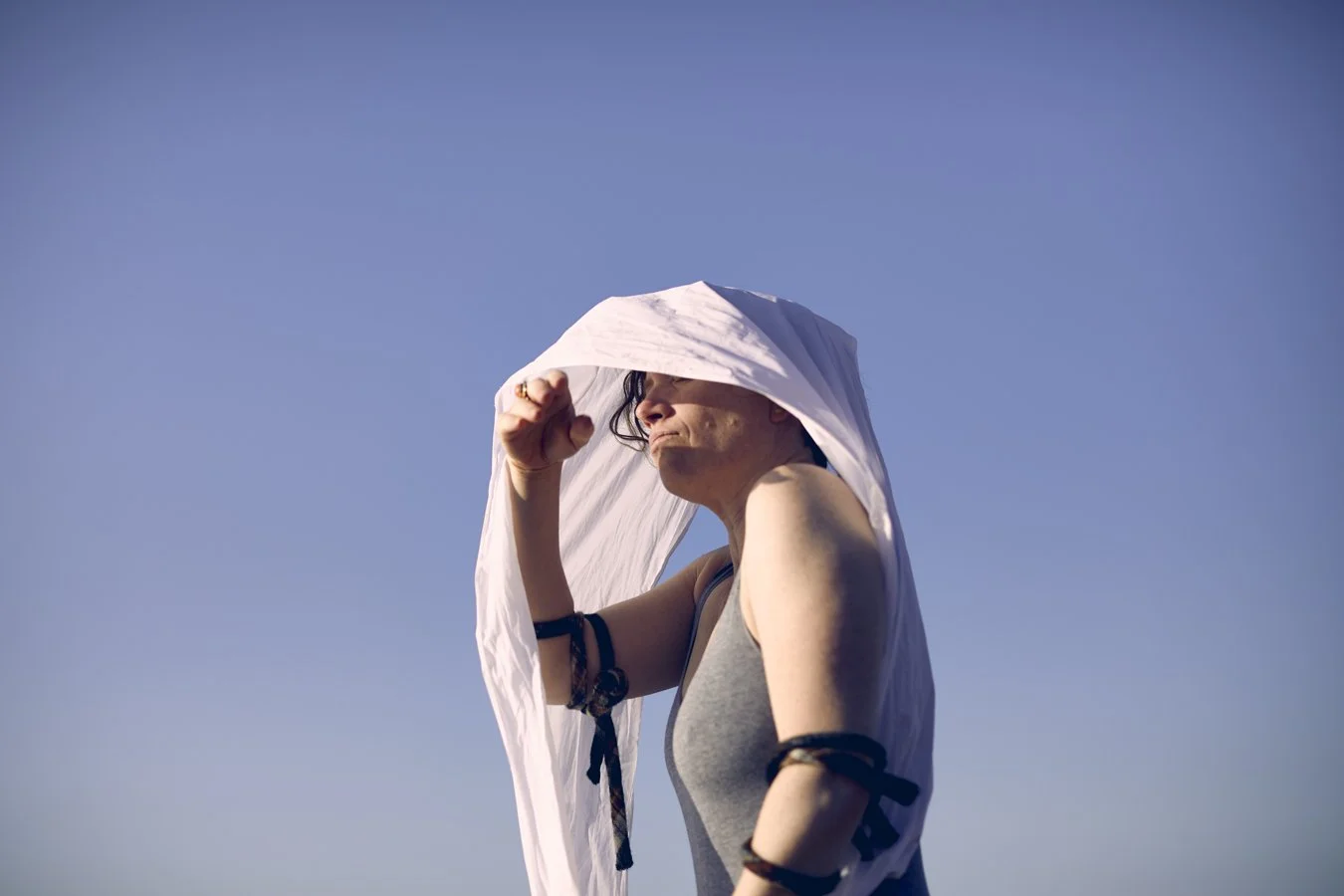
Natasha: I was exploring restraints and sensory tools—hoods, belts, materials that help us feel our edges. For some neurodivergent people sensory regulation is really important. In the shoot I was using materials to stim, to feel where I was in space. Movement helps me communicate when I can’t speak, I have a painting by a neurodivergent artists where she’s trapped in a jumper she’s taking off - this expresses the frustration of communication. And that morning of shoot by the sea—God, it was stunning. The light was so blue, so soft.
Lorna: It felt almost spiritual.
Natasha: It did. And it didn’t feel like a typical shoot. There was no divide between subject and photographer. That’s rare. The camera didn’t create hierarchy—it felt like we were both part of the image-making.
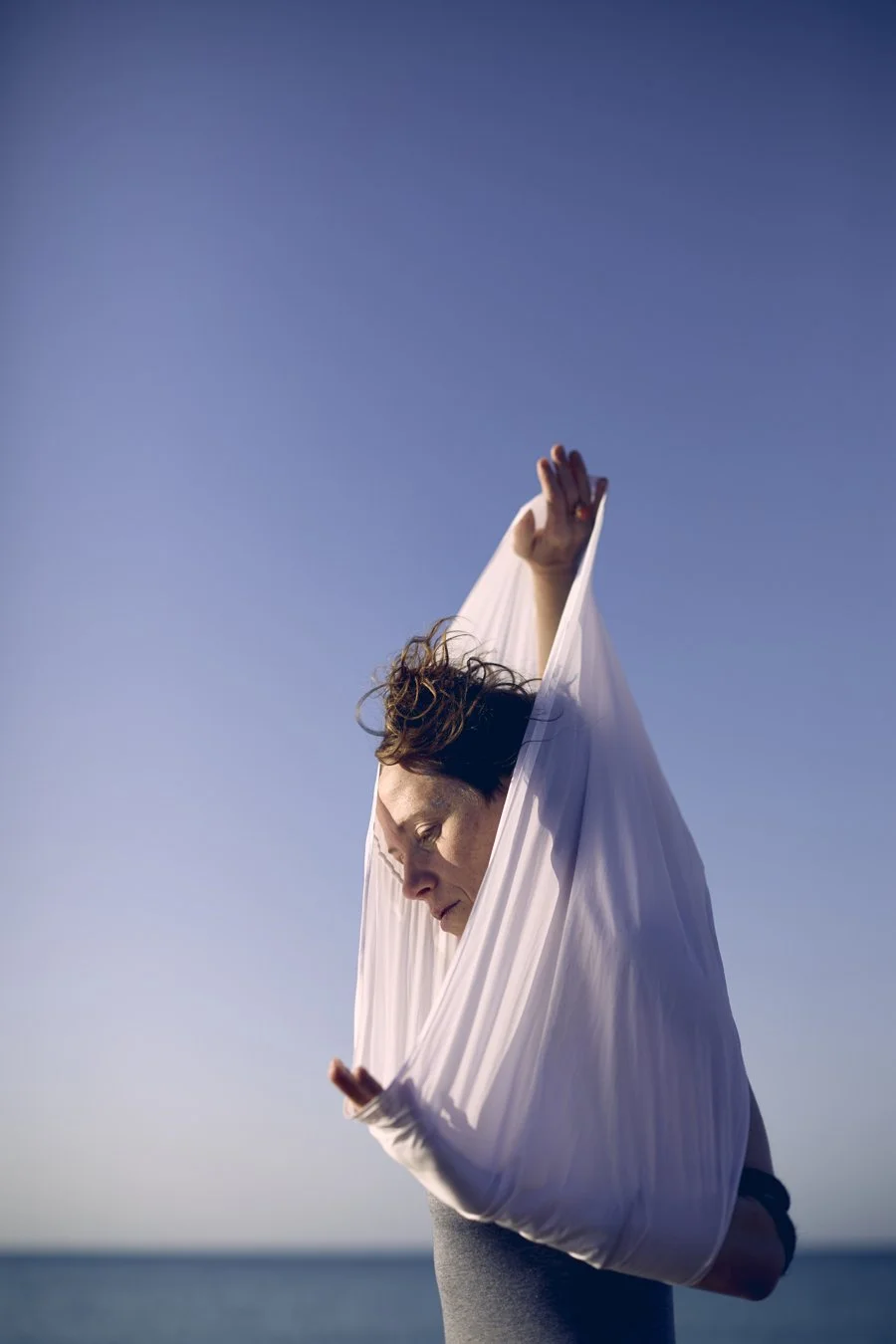
Lorna: That’s what I always aim for—that shared process.
Natasha: And you achieve it.
I have been thinking about the issue of who controls the image for years. I used to be in corporate communications and branding, where I was art-directing photo shoots. I've been a life model for many years. And my ex-husband captured our life together with pictures of me. I did years of self-portraiture to change my relationship with the camera. It’s rare to find a photographer like you, with this understanding of fully collaborating..
“For some it’s in relationship with the divine. We're always symbiotically doing something with something else.” NG
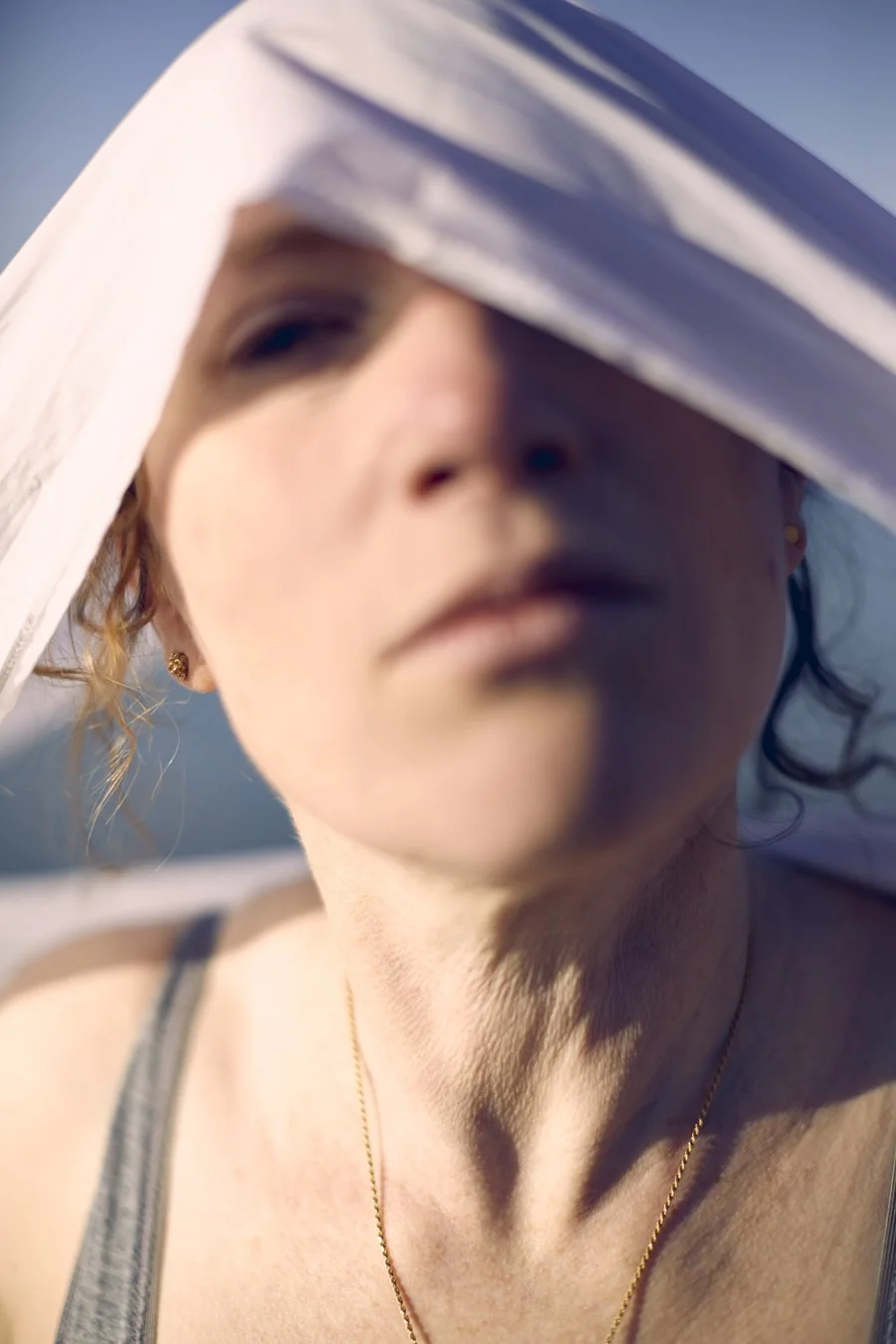
Lorna: What about the performative aspect of photography? Do you think about it when being photographed?
Natasha: I’m very interested in how someone is being seen. I studied Theatre of the Oppressed and a course about performativity in social norms, such as heterosexuality - looking at how power operates through how we’re seen. I was part of an artist-led breastfeeding performance exploring these issues. As an autistic person, Facial and bodily expressions, social norms of language and conduct are mysteries I’ve had to learn.
“The camera didn’t create hierarchy, it felt like we were both part of the image-making.” NG
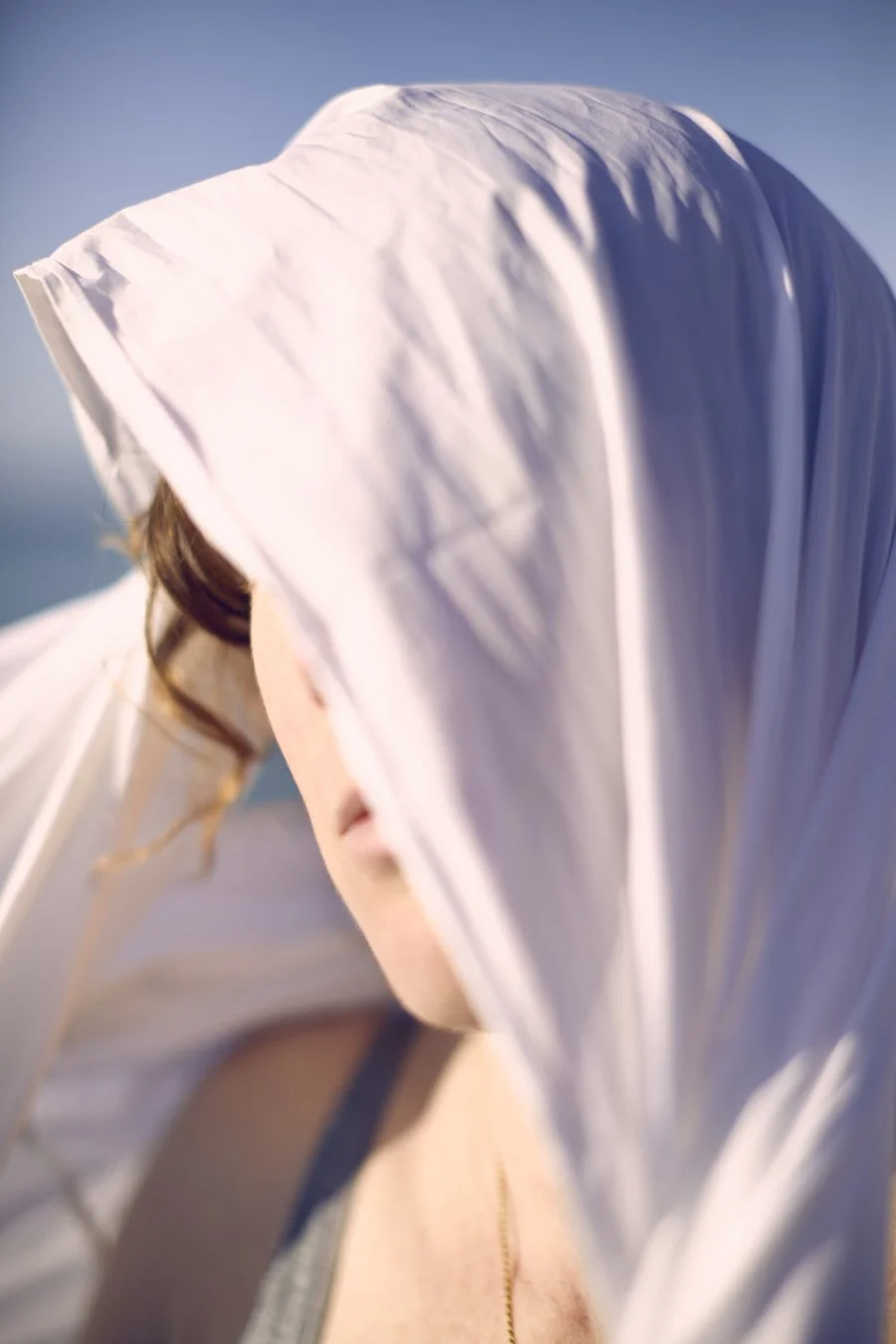
Lorna: How did you feel when you saw the images we made?
Natasha: It was interesting because I was in a low, withdrawn time. The shoot really gave me some life. But my lens on the photos immediately after wasn't clear, and then later, when we went back to them, I saw them differently. They've helped me understand the significance of honestly capturing different states. You're not trying to say ‘this is the essence of me’. It's an event that communicates something about that person at that time
And photos are always reflecting something back to you that you need to understand about now. That's why portraits are so important.
Lorna: Final question—what do you love most about collaboration?
Natasha: I don’t know any other way of existing. There’s a theory ADHD people are struggling in a system where we're expected to do everything on our own, without the structure of other people's activities. I've got a mix of that with an autistic sense that all of the world is a series of problems and glories that we should share. To me, it's a natural state of constant collaboration, and it doesn't have to be with another human. It can be a character, an instrument, an animal. For some it’s in relationship with the divine. We're always symbiotically doing something with something else.
Lorna: Beautiful. Thank you so much, Natasha.
Natasha recently launched a new consulting service combining practical and contemplative approaches to work.
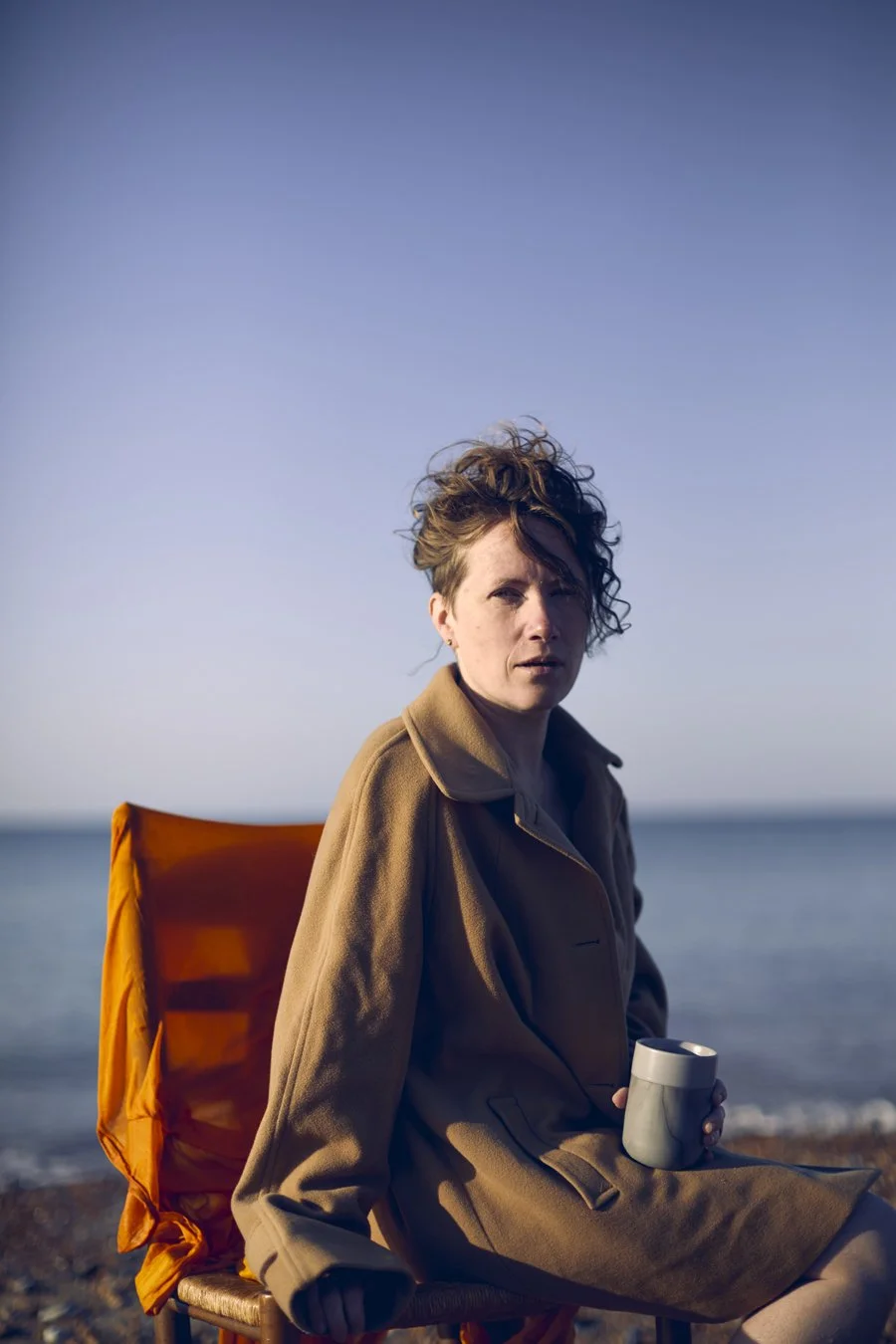
Natasha warming up after the shoot